
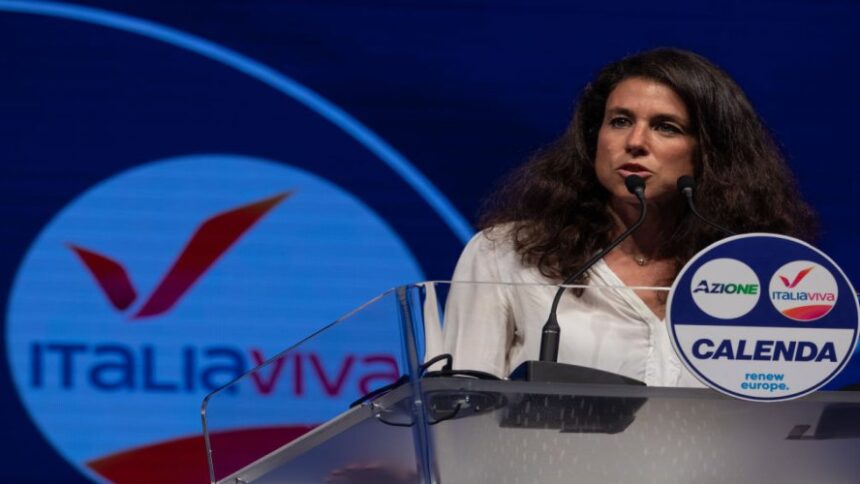
Italy’s liberal parties fell short of winning a single seat to help the liberal Renew group in the European Parliament in June’s European elections but now show signs of wanting to unite, with Azione vice-president Giulia Pastorella leading the charge and seemingly determined to reunite the liberal camp.
The liberal-democratic sphere in Italy, represented by parties such as Carlo Calenda’s Azione and former prime minister Matteo Renzi’s Italia Viva, has been left fragmented and politically impotent.
Pastorella, a candidate for the party’s leadership in its congress slated between February and April 2025, is determined to reunite the liberal camp.
Reflecting on the elections, Pastorella was candid about the consequences of the split. “Failing to send representatives to Europe and support Renew Europe in opposing the far-right wasn’t just a mistake; it was a disaster,” she told Euractiv in an interview.
According to Pastorella, the liberal camp’s fragmentation has weakened its ability to connect with an electorate that remains present but divided. “Had the two lists aligned, they would have easily crossed the threshold and achieved a strong result. This experience underscores the urgent need to unify and offer a coherent alternative,” said Pastorella.
Pastorella argues that Italy’s liberal movement lags behind its European counterparts, where similar parties play a decisive role in shaping policy.
“In countries like Germany and France, liberals achieve significant results and even govern. It’s disgraceful that Italy, with its strong liberal tradition, can’t replicate this success. The demand for a liberal option exists—the problem is the political offer,” Pastorella added.
Consolidating like-minded parties is one of the main challenges, but developing a clear and positive vision is equally important.
“Too often, we define ourselves by what we oppose: we’re not populist, not nationalist, not right-wing, not left-wing. Yet, we seldom articulate what we truly stand for—free markets, European integration, entrepreneurship, and individual freedoms. Without a strong and affirmative identity, we risk amplifying others’ narratives instead of shaping our own.”
Criticising Meloni’s government
Turning her attention to the Italian government of Prime Minister Giorgia Meloni, Pastorella expressed deep concern about its approach to governance and policy.
“Beyond harsher penalties and populist rhetoric, this government has done little of substance. Much of its success has relied on the groundwork laid by the Draghi administration. Now that those initiatives are coming to fruition, the cracks are beginning to show,” said Pastorella.
She highlighted pressing issues such as stagnant wages, low productivity, and a declining middle class, masked by employment statistics that fail to reflect the reality of precarious work and systemic inefficiencies.
On digital transformation, Pastorella criticised the government’s lack of vision: “Their approach to innovation is reactive and insular, driven by fear rather than opportunity. Small and medium enterprises would greatly benefit from embracing innovation, yet the government’s policies suggest a deep misunderstanding of these challenges.”
A Vision for the Future
Pastorella sees Azione as uniquely positioned to tackle these challenges, drawing on its roots in policies such as ‘Industry 4.0’, which was introduced by Calenda.
“This was a perfect example of encouraging business innovation without state interventionism, allowing companies to choose the best solutions with the state as a guarantor. This principle should underpin our broader approach to enterprise and economic policy,” she said.
For Pastorella, Italy’s most pressing problem is creating a competitive, innovative economy that lifts workers from poverty.
“Our country suffers from stagnant productivity, struggling enterprises, and an exodus of talent. Addressing these challenges requires a focus on innovation—not because it’s trendy but because it drives productivity, wage growth, and broader social benefits. Without creating wealth, there’s nothing to redistribute,” she added.
(Alessia Peretti | Euractiv.it)
Source: Euractiv.com










Leave a comment