

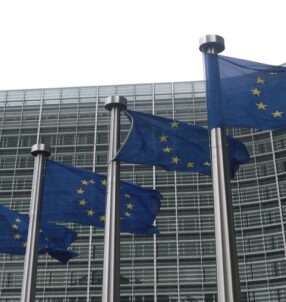
Bulgaria will meet the requirements to join the eurozone by January, leaving the final decision to Bulgarian politicians, Dimitar Radev, governor of the Bulgarian National Bank (BNB) said.
BNB data suggest that inflation will fall to a level compatible with euro adoption by January, paving the way for the country to adopt the euro, possibly as early as 1 January 2026.
“Politicians must ensure we secure the European Council’s final decision within 2025. The specific date for adopting the euro typically follows six months after such a decision,” said Radev.
While the technical infrastructure to join the eurozone is in place, Radev warned that the window of opportunity could be closing.
“Bulgaria’s payment, information, accounting, and statistical systems are fully prepared for eurozone operations. We are also ready for the currency exchange process. We’ve been printing euro banknotes for four years and are now producing test batches of Bulgarian euro coins,” he added.
Inflation under control as budgetary challenges loom
Bulgaria has successfully tamed inflation, but the budget deficit is a major challenge. The finance ministry has reported a €9 billion budget gap since August, equivalent to around 8% of GDP, according to a Euractiv investigation.
The deficit is due to increased spending on pensions, military and police salaries and other budgetary commitments. The caretaker government has promised a balanced budget with a 3% deficit, which would require significant revenue increases.
Proposed measures include a one-off windfall tax on bank profits, higher excise duties on alcohol and tobacco, broad tax amnesties and other initiatives.
Radev also criticised the proposed windfall tax on bank profits, a measure implemented in other EU countries, warning of potential risks.
“Taxing bank windfall profits would raise borrowing costs, affecting everyone. The banking sector remains one of the few pillars of financial stability, and this decision could destabilise it,” Radev said in an interview with the Bulgarian National Radio.
Eurozone and Schengen: geopolitical anchors for Bulgaria
Pro-European politicians see joining the eurozone and Schengen as geopolitical milestones to anchor Bulgaria, the EU country with the most pro-Russian public sentiment, firmly within the Western sphere of influence.
According to recent opinion polls, public opinion remains divided over the introduction of the euro. Meanwhile, the pro-Russian radical party Vazrazhdane (Revival) has vigorously campaigned against Bulgaria’s plans to join the eurozone.
(Krassen Nikolov | Euractiv.bg)
Source: Euractiv.com










Leave a comment