

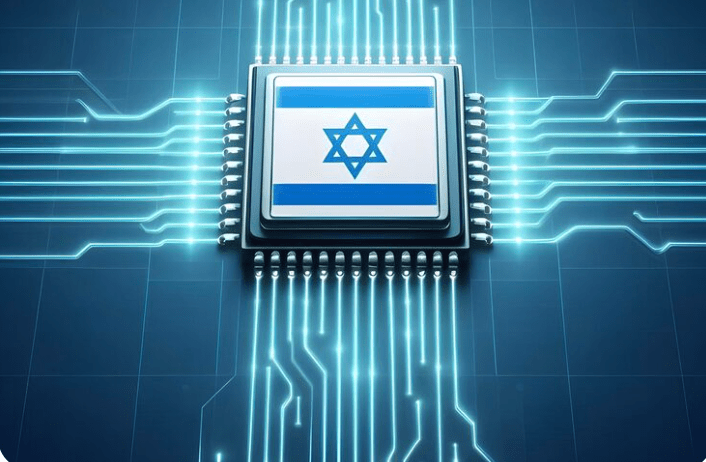
Israel occupies a significant position within the geopolitical landscape of the Middle East, where issues of security, diplomacy and economic development intersect. Since its establishment in 1948, the state has operated within a complex regional environment characterized by interstate conflicts, territorial disputes and security threats posed by both state and non-state actors. Consequently, national security has become a defining feature of Israeli domestic and foreign policy.
One of Israel’s most prominent roles in the region is its status as a military and technological power. The country maintains one of the most technologically advanced defense establishments in the Middle East and invests substantially in military research and development. Israeli policymakers have consistently argued that maintaining military superiority is essential for ensuring national security and countering threats from organizations such as Hamas and Hezbollah. To this end, Israel employs a broad range of capabilities, including intelligence operations, missile defense systems, air power, cyber capabilities and specialized military units. At the same time, scholars, international organizations and policymakers have debated the proportionality and humanitarian implications of certain military operations, making Israeli security policy a recurring subject of international scrutiny and academic discussion.
Israel’s relationships with neighboring states have evolved considerably over time. The peace treaties signed with Egypt in 1979 and Jordan in 1994 significantly reduced the likelihood of conventional interstate conflict with two of its most important regional neighbors. More recently, the Abraham Accords facilitated the normalization of relations between Israel and several Arab states, including the United Arab Emirates and Bahrain. These agreements reflected changing regional priorities, including increased economic cooperation and shared concerns regarding Iran’s regional influence. Nevertheless, the Israeli–Palestinian conflict remains a central issue affecting Israel’s diplomatic relations throughout the Middle East and the broader international community.
The United States remains Israel’s closest strategic ally. Bilateral relations are grounded in shared security interests, extensive defense cooperation, economic ties and political support. The United States provides substantial military assistance and collaborates closely with Israel in areas such as intelligence sharing, technological innovation and regional security. Despite the strength of this partnership, differences have occasionally emerged concerning settlement policies, approaches to regional diplomacy and the management of the Israeli–Palestinian conflict.
The United Kingdom likewise maintains a significant relationship with Israel, particularly in the fields of trade, scientific research, technology and security cooperation. While successive British governments have recognized Israel’s security concerns and right to self-defense, they have also expressed criticism of certain Israeli policies in the occupied Palestinian territories and have generally supported efforts to achieve a negotiated two-state solution.
Economically, Israel has developed into one of the world’s most innovative and technologically advanced economies. Frequently described as the “Start-Up Nation,” Israel has established itself as a global leader in sectors such as cybersecurity, biotechnology, artificial intelligence and agricultural technology. Sustained investment in education, research and entrepreneurship has contributed to high levels of economic growth, technological innovation and international competitiveness.
Assertions that Israel seeks global domination or aims to “conquer the world” are not supported by credible empirical evidence and are generally classified within academic literature as conspiracy theories rather than legitimate geopolitical interpretations, but some scholars still believe this option. Mainstream scholarly and policy analyses instead focus on factors such as Israel’s security concerns, regional influence, strategic partnerships, domestic political dynamics and economic interests. A comprehensive understanding of Israel’s role in regional and international affairs, therefore, requires careful examination of both its security challenges and the controversies associated with its policies, while avoiding unsupported claims and overly simplistic narratives.












Leave a comment