


By Martin Banks
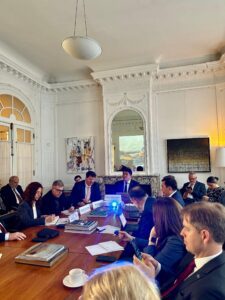
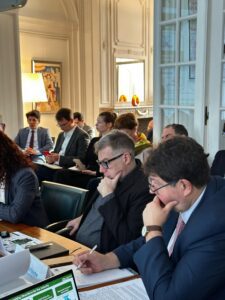
The Kazakhstan–EU Gateway (KEG) has officially launched its new cooperation platform today by convening the high-level roundtable “Strategic Partnership on Critical Raw Materials”, bringing together representatives of the European Commission, EEAS, research institutions, industry leaders, and diplomatic missions.
The event, held in cooperation with the Brussels Energy Club (BREC), highlighted the growing urgency of building “resilient, diversified, and sustainable” critical mineral supply chains between Kazakhstan and the European Union.
The roundtable took place against a backdrop of major geopolitical shifts, including disruptions to Black Sea logistics, renewed attention to the Middle Corridor, and intensifying global competition for supply chains.
The discussion builds on the 2022 EU–Kazakhstan Memorandum of Understanding on Raw Materials, Batteries, and Renewable Hydrogen—one of the first such agreements the EU concluded with a non-EU country.
Speakers said that the partnership has matured substantially and aligns closely with the EU Critical Raw Materials Act, which emphasizes responsible sourcing, processing, and strategic partnerships to reduce Europe’s dependency on vulnerable supply chains.
KEG, the event was told, aims to position itself as a “permanent platform supporting policy dialogue, B2B engagement, and knowledge exchange across the raw materials, energy, and industrial sectors.”
Speaking at the event, Dr. Marat Terterov, Founder of the Brussels Energy Club, underscored Kazakhstan’s rising geostrategic relevance: “Kazakhstan stands increasingly at the crossroads of global competition – not only because of its geography, but because of its capabilities, predictability, and unwavering commitment to constructive engagement with our international partners.”
He highlighted Kazakhstan’s exceptional mineral base, including 124 identified deposits of rare and rare-earth minerals, essential for Europe’s green and digital transitions.
Dr. Terterov said Kazakhstan is now moving from a predominantly extraction-driven model toward deeper re-industrialization aimed at retaining more value within the country.
The European perspective was reinforced by Dr. Peter Tom Jones, Director of the KU Leuven Institute for Sustainable Metals and Minerals, who reminded participants that “without critical metals, there is no transition to climate neutrality and digital transformation.”
He stressed the need for vertically integrated mine-to-cleantech value chains that combine domestic European production with “responsible sourcing from trusted partners such as Kazakhstan.”
He added that integrating Kazakhstan case studies into Horizon Europe R&D—covering geological mapping, responsible mining 2.0, tailings reprocessing, and circular hydrometallurgy—would significantly deepen cooperation.
Dr. Jones also noted that Kazakhstan’s large and metal-rich tailings present unique opportunities for EU–Kazakhstan pilot projects that cannot be replicated easily in Europe due to smaller or lower-grade deposits.
Representing the European External Action Service, Luc Devigne, Principal Adviser for Critical Raw Materials, highlighted the political timeliness of the event in the aftermath of the visit of European Council President António Costa to Kazakhstan,
He emphasized the strategic importance of ensuring that political momentum is translated into concrete industrial and technological cooperation.
Additional comments came from other panelists including John M. Roberts, Senior Fellow at the Atlantic Council and expert on Eurasian energy security, who said,“Kazakhstan’s role in Europe’s long-term energy and resource security will only grow. The Middle Corridor is no longer a future concept—it is fast becoming a strategic necessity, and both sides must invest in its efficiency and predictability.”
From the Kazakh side, Sairan Baizhakhanov, Representative of the Ministry of Industry and Construction of Kazakhstan to the EU, commented: “Our objective is clear: we aim not only to supply raw materials, but to build competitive processing and midstream industries in Kazakhstan. We welcome European partners who are ready to co-invest, co-develop technologies, and create value-added production chains together.”
Following the first round of interventions, H.E. Henri Vantieghem, former Belgian Ambassador to Kazakhstan, emphasized Belgium’s longstanding interest in enhancing ties with Central Asia: “Belgium has always valued its partnership with Kazakhstan. Today’s discussion proves that cooperation on critical raw materials is not only possible, but mutually beneficial and strategically timely. I could experience the improvement of mutual understanding between the leadership of the Central Asian countries. Central Asia nowadaysconstitutes a geopolitical area of stability.”






Leave a comment