
Prountzos-Harmanci support the relaunch of bicommunal program Imagine.
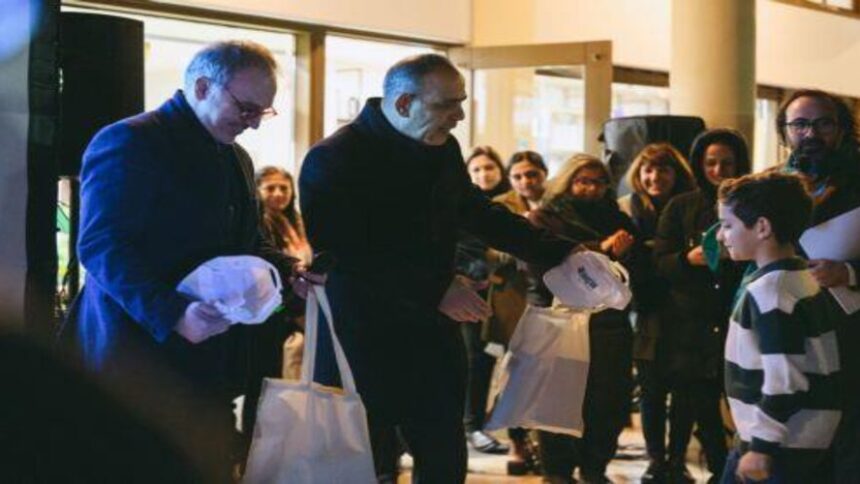
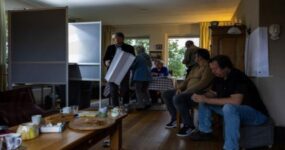
Mayor of Nicosia Charalambos Prountzos and “Mayor” of the Turkish-occupied part of Nicosia Mehmet Harmanci attended an event last Friday for the relaunch of bicommunal program ”Imagine”, according to a press release by the Association for Historical Dialogue and Research (AHDR) which organized the event.
Prountzos and Harmanci, the press release says, expressed their strong support for the program and its role in promoting critical thinking, eliminating of stereotypes and creating the foundations for peace and reconciliation on the island.
Harmanci said, according to the press release, that ”if we want to achieve peace, reconciliation and solidarity among us, then we really need to get to know each other”.
Prountzos thanked the teachers who participated in “Imagine” and those who continue to keep hope alive.
The Mayor expressed his hope that society will move to real experience and cooperation between communities, starting with children at a young age and extending to everyday life.
The event featured the video “Let’s Imagine Together!”, a collaboration between AHDR and the production company Neydi Olacağı, which is an invitation for cooperation and dialogue and calls on the leaders of the two communities to join forces for the resumption of “Imagine.”
Over 8,200 students and 2,600 teachers across the island participated so far in the program which offers workshops and training on peace, anti-racism and human rights.
Loizos Loukaides, Director of AHDR said that their work cannot stop ”while we wait for politics to catch up with reality,” nor can they remain silent ”due to impasses or setbacks.”
He went on to say that in moments of crisis civil society must insist on its role.
Co-chairs of the Board of Directors of the Association Kyriakos Pachoulides and Hale Silifkeli said that “Imagine” showed what is possible when education becomes a bridge instead of a border, and when young people from different communities meet as people and not as ”symbols or labels”, as well as when educators are supported in a task to facilitate difficult conversations with confidence and honesty.
Source: Parikiaki.com




Leave a comment