
In an increasingly tumultuous world, strengthening Europe’s digital economy is not merely a nice ambition for European policymakers: it is a core determinant of the prosperity and security of the continent.
The result of the US election is a wake-up call for Europe’s overly heavy reliance on technological infrastructure from foreign countries. European consumers, businesses, and public administration completely rely on their web of interconnected assets – from chips, data storage, and computing power to digital platforms and Generative AI. Europe does not own or sufficiently control any of the tech stack elements that underpin today’s world.
Draghi highlights in his report that 70% of the new value created in the global economy will be digitally enabled over the next decade. However, Europe’s digital industry continues to lag behind that of the US and China. If we do not change course soon, this gap will continue to widen until it is irreversible.
Ursula von der Leyen’s appointment of Henna Virkkunen as the European Commission’s first-ever executive vice president for Tech Sovereignty indicates that digital autonomy is high on the EU’s political agenda. Yet, a clear strategy for how Europe intends to deliver its tech sovereignty is missing.
More regulation won’t solve the problem. Europe is already struggling to effectively implement existing laws: from continuous GDPR violations by social media platforms to tech giants’ defiance of the DMA and DSA, new EU regulation on America’s champions would only result in Trump’s furious reaction with tariffs, or worse, with lower defense protection.
Securing Europe’s digital independence can only be achieved by a joint effort of Europe’s private and public sectors. Europe urgently needs an overarching industrial strategy to align governments’ and industry’s objectives, so that Europeans can have their technology stack, the eurostack. Investments, public procurement, standards, incentives, public-private partnerships, and other tools must be all coherent and support a common vision of tech independence.
While European industry is highly fragmented and lacks the scale of the US or China’s tech champions, it does not lack innovation and technological capacity. Governments must offer a strategic direction and support in federating the private sector.
European tech companies, especially SMEs, are pivotal in transforming Europe’s digital economy. SMEs represent 99% of European business. Smaller digital companies are drivers of digital innovation, particularly in the B2B sector. Europe’s digital SMEs, startups, and scaleups are the key providers of the software and services that power the digital transformation of other businesses and public administrations—especially small and medium-sized ones. By placing digital SMEs at the core of its digital strategy, Europe can not only strengthen its technological sovereignty but also achieve true digital leadership.
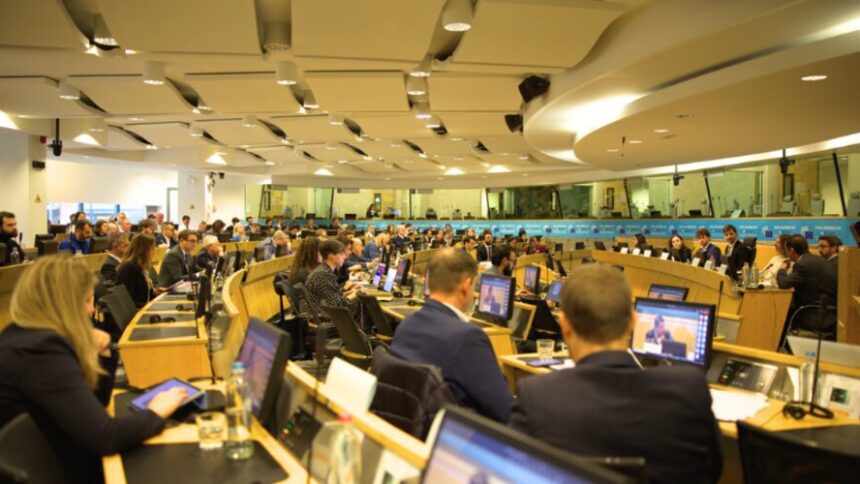
Europe needs an ambitious and coherent eurostack strategy, where European tech SMEs will be at the heart of delivering the digital public infrastructure that will unleash innovation and enable European digital sovereignty. The DIGITAL SME summit, taking place on December 10 at the European Economic and Social Committee, will bring together leading experts, key industry players, and policymakers to advance the conversation about Europe’s digital sovereignty. Register to join here.
Sebastiano Toffaletti is the Secretary-General of the European DIGITAL SME Alliance.
Source: Euractiv.com












Leave a comment