
By Martin Banks
The authorities in Brussels say they are taking “another strategic step” in the city’s transition to a circular economy.
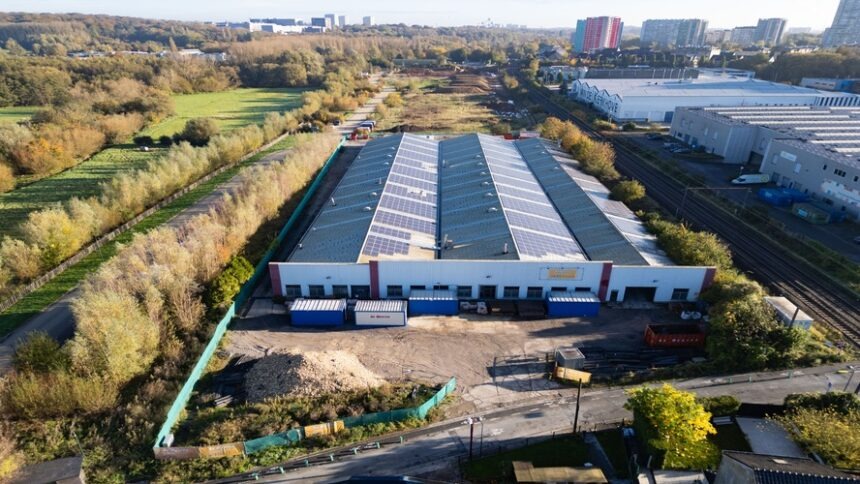
This comes with the ReUse Park, project that will transform a disused warehouse in Ganshoren into a regional hub dedicated to the reuse of construction materials.
Following the first phase of the Design, Build & Operate (DBO) contract, three teams have been selected to continue developing this flagship project.
The aim is to structure the construction materials reuse sector in Brussels: KORE – OPLA, Valens, and Adapto – Cordeel Belgium.
A strategic project for Brussels’ circular economy
The ReUse Park involves the conversion of a 6,000 m² warehouse into a regional hub dedicated to the reuse of construction materials through a public-private partnership.
The warehouse is located on citydev.brussels’ Darwin site, at Rue Nestor Martin 42 in Ganshoren.
After its redevelopment, the site will host sorting, dismantling, and reconditioning activities for construction and deconstruction materials, as well as training programs, for both the private and public sectors.
To carry out this project, citydev.brussels has partnered with key organizations through collaborations with embuild.brussels and its Ad Vitam Material Brussels network, as well as the Brussels sustainable construction cluster hub.brussels, ecobuild.brussels, and the non-profit organization CoopCity.
The project is also a recipient of funding from the 2021-2027 ERDF programme.
A concrete response to economic and climate challenges
In a context of crises and increasing climate constraints, the relocation of resources is becoming essential.
The construction sector, a major consumer of materials and a significant generator of waste, is at the heart of this transition. By 2030, new carbon footprint requirements will accelerate its transformation, making the development of local reuse solutions both necessary and indispensable.
This project also addresses a growing need in the sector: to have storage capacity that secures high-quality materials identified on the market but reusable in the longer term.
Beyond its logistical function, the site aims to become a catalyst for the sector by strengthening existing supply chains and fostering synergies between reuse stakeholders.
Benjamin Cadranel, general manager of citydev.brussels, told this site, “With the ReUse Park, Brussels confirms its ambition: to make reuse a pillar of its urban development. This project must become a structuring hub for the circular construction sector at the regional level and a benchmark at the international level.”
The project will be carried out under a Design, Build & Operate (DBO) contract. The winning team will therefore be responsible for designing, building, and operating the site. This innovative approach allows for the integration of future operators from the outset, ensuring optimal alignment between local needs and the project’s ambitions.
From the beginning, citydev.brussels says it has sought to involve stakeholders in the sector. An information session was held in November 2025, which was well attended by contractors, architects, engineering firms, and reuse organizations. This exchange allowed for the collection of their feedback and the adaptation of the tender documents to the realities on the ground.
The tender, launched in February 2026, generated significant market interest, confirming the growing momentum around circular construction. After reviewing the applications, three teams were selected to continue in the process: KORE – OPLA, Valens, and Adapto – Cordeel Belgium. They stand out for the high quality and complementary profiles of the team, bringing together diverse and particularly relevant expertise. This diversity suggests ambitious and innovative visions for the future development of the project.
Next Steps
These teams will now refine their proposal and submit a bid in September 2026, including their architectural, technical, and operational visions for the project. A four- to six-month negotiation phase will follow, with the contract expected to be awarded in the second quarter of 2027.
The project’s progress remains on schedule according to the timeline set out in the ERDF application, with full implementation expected by the end of 2029.










Leave a comment