
The Commission is betting on farmed fish to cut reliance on imports, but growing concerns, ranging from sustainability to animal welfare, threaten to undermine the effort
The EU last year rolled out a marketing campaign for aquaculture – the farming of aquatic organisms on land or at sea – amid fears the practice isn’t especially popular with citizens.
“There is a perception that this activity is not beneficial, especially for the environment, and a lack of information and consideration of the role of food security in this,” Lorella de la Cruz Iglesias, from the Commission’s fisheries department, said during a meeting in Parliament this week.
The Commission’s bet on aquaculture is not accidental, as the stakes are indeed high. About 60% of seafood landing on EU citizens’ tables comes from third countries, and concerns over the bloc’s strategic autonomy have created an appetite for fewer imports.
It remains to be seen whether the recent PR push will help the EU farm more fish.
Annual aquaculture production in the bloc is around 1 million tonnes, a stagnant figure that Norway alone slightly exceeds. In a freshly published evaluation of the EU’s Common Fisheries Policy (CFP), the Commission warned that growth in this field has been minimal over the past decade.
Along with weak public acceptance, de la Cruz Iglesias blamed long-standing issues such as limited access to space and excessive red tape in obtaining permits for projects.
Carnivorous fish
The Commission’s ambitions is aquaculture are colliding with environmental concerns.
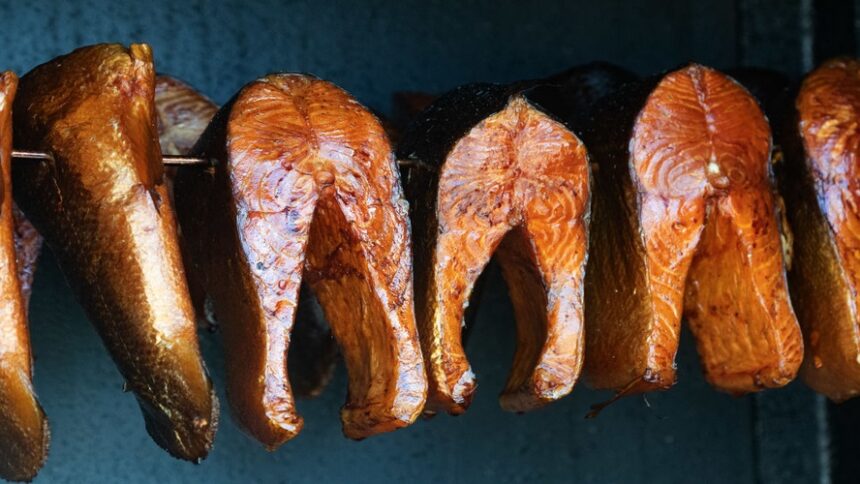
Advocacy groups have been especially wary of farming carnivorous species such as salmon, which are popular with consumers but require large volumes of fish feed, increasing pressure on stocks of smaller species.
In France, the debate over salmon aquaculture is heating up. In the coastal town of Verdon-sur-Mer, in the southwest of the country, activists are up in arms over plans to build a mega salmon farm capable of producing 10,000 tonnes of one of Europeans’ favourite fish.
French Environment Minister Monique Barbut recently came out against the “Pure Salmon” project, which national authorities are still assessing.
During the debate in Brussels last week, several left-wing MEPs raised concerns over carnivorous species.
MEP Isabella Lövin (Greens, Sweden) urged the Commission to promote forage species like sardines and anchovies, as well as aquaculture projects combining shellfish farming with offshore energy.
De la Cruz Iglesias said that it was already part of the Commission’s plans, but warned that consumer demand was moving in a different direction. “By not producing carnivorous species we won’t end the problem, because they will be imported. It’s a consumer preference,” she told MEPs, pointing to salmon and growing demand for it.
Less than 1% of the salmon consumed in the EU is produced domestically, with Norway accounting for over 80% of imports, according to EU data.
Octopus in the wild
The cultivation of cephalopods like octopus – still an emerging practice and not yet a reality in the EU – is also making waves.
NGOs have warned about such creatures’ “extraordinary intelligence” and solitary nature, as well as the fact they are also carnivores reliant on fish-based feed.
In Parliament, MEP Luke Flanagan (The Left, Ireland) spoke against plans by the company Nueva Pescanova to build the world’s first octopus farm in the Canary Islands.
Despite rumours of abandonment, the company confirmed to Euractiv that the project was still undergoing administrative checks.
The EU is a large importer of octopus, most of which comes frozen from Morocco and Mauritania.
Source: Euractiv.com









Leave a comment