

By Martin Banks
A musical concert aims to pay tribute to the victims of the Bois du Cazier tragedy, which took place in Marcinelle in the south of Belgium 70 years ago.
The Bois du Cazier tragedy (also known as the Marcinelle mining disaster) occurred on August 8, 1956, at the Bois du Cazier coal mine in Marcinelle, Charleroi.
It is the worst industrial and mining accident in Belgian history, resulting in the death of 262 miners from 12 different nations.
Out of 275 men underground that morning, only 13 survived. Most of the 262 victims died of asphyxiation and carbon monoxide poisoning.
Because of post-war labour agreements, the majority of the victims were immigrant guest workers—most notably 136 Italians, alongside 95 Belgians and workers from Poland, Greece, Germany, and other countries.
The historic pit has been preserved and is now a Bois du Cazier museum and memorial site, recognized as part of UNESCO World Heritage. The disaster forced a major overhaul of European labor standards and underground safety regulations.
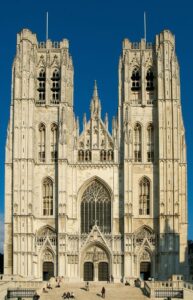
A musical event to mark the 70th anniversary, and honour the dead, will be held at Brussels’ Cathedral of St. Michael and St. Gudula later this month.
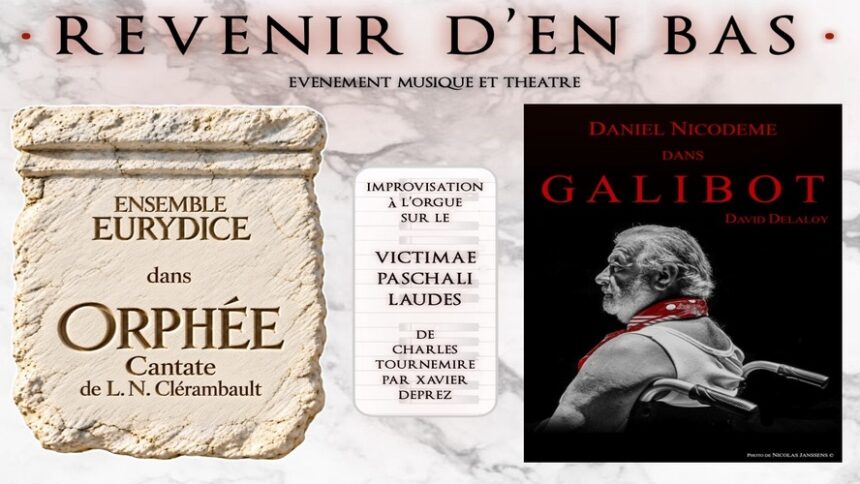
Organised by the city’s Culture et Tourisme, it takes place on Tuesday, November 17 at 8pm with the theme, “Returning from Below.”
The event will consist of two parts.
Part One (half an hour):
The cantata “Orphée” by Clérambault—a contemporary of Lully—will be performed by the baroque ensemble Eurydice, featuring soprano Caroline Jestaedt.
Following this, titular organist Xavier Deprez will perform an improvisation based on the hymn “Victimae Paschali Laudes,” reconstructed from the work of Charles Tournemire, who succeeded César Franck at the Basilica of Sainte-Clotilde.
Part Two (one hour and fifteen minutes) comprises “Galibot,” a one-man theatrical performance by Daniel Nicodème.
Written by David Delaloy, the text presents the perspective of a survivor of a firedamp (methane) explosion in a mine. The performance explores themes of fighting spirit, resilience, memory, and how others perceive disability—all delivered with a blend of humor and emotion.
Historically, the term “galibot” referred to young apprentice miners who were sent into the narrowest, most confined areas of the mine.
In short, following the song of Orpheus and the organ-led exaltation of the “Victimae Paschali Laudes”, the stage will be given over to an exploration of the trauma of the mines and the life that follows. This will be brought to life through the talents of Daniel Nicodème, Caroline Jestaedt, and the ensemble Eurydice—comprising Maïa Silberstein (violin), Bárbara Ferraz (traverso), Clémence Schiltz (viola da gamba), and Xavier Deprez (organ and harpsichord).
A spokesman for the event told this site, “It promise to be a fitting and touching tribute to the people who lost their lives in this mining accident.”
Further info:
Ticket prices:
€5: People with disabilities and their companions
€10: Students and those under 18
€25: Adults (18+)
€35: Front row
Online booking and prepayment are encouraged via: https://www.billetweb.fr/
Tickets may also be purchased on the evening of the event, subject to availability.
The doors of the cathedral open at 7.15pm.
Accessibility: The Cathedral of St. Michael and St. Gudula is located near Brussels’ Central Station, and parking is readily available in the vicinity. The “Parc” and “Gare Centrale” (Central Station) metro stations are both equidistant from the entrance.











Leave a comment