
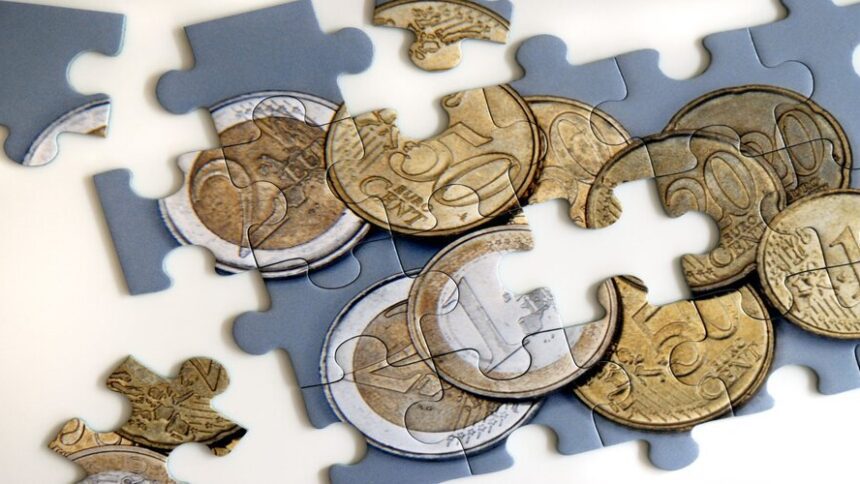
SOFIA – Bulgaria has irreversibly lost a €653 million EU grant under the Recovery and Resilience Facility due to delayed reforms and is at risk of losing most of the funding under this programme.
“The second payment under the Recovery and Resilience Plan worth €653 million will be denied,” Deputy Prime Minister Tomislav Donchev announced on Wednesday.
In four years, Bulgaria has implemented only a small part of the reforms it promised to the European Commission, the deputy prime minister added.
The country had committed to adopt a total of 321 measures and reforms in order to receive the full amount of €5.5 billion to be disbursed in nine tranches. So far, the country has only implemented 115 of these measures.
So far, Bulgaria has only received the first tranche of the Recovery and Resilience Facility, worth €1.34 billion. The country was due to receive a further €4.2 billion, but it is becoming clear that it will lose a significant part of this. The remaining €3.55 billion is still at risk.
Donchev noted that the deadline for payments under the National Recovery and Resilience Plan is August 2026.
“After this date, expenses are not eligible. That is, if we have payments for any of the projects after this date, they will be covered by the national budget,” he explained.
So far, the government has paid for about 10% of the projects contracted under its National Recovery and Resilience Plan.
“Now in a year and a half we will have to pay 90%, which is obviously impossible”, he said.
The deputy prime minister said the government had agreed with the European Commission to drop some of the projects.
“If they are not dropped, they will be financed from the state budget, which will generate a risk of a budget deficit in 2026,” he added.
Bulgaria lost the chance to receive the second payment under the EU’s flagship programme in October 2024, when the pro-Russian party Vazrazhdane and the populist force There is Such a People blocked the adoption of an updated roadmap for climate neutrality. “There is Such a People is now a junior coalition partner in the GERB-led cabinet.
The country has also been slow to adopt its anti-corruption reform, a law on personal bankruptcy and a law on the protection of whistleblowers.
Now Finance Minister Temenuzhka Petkova claims that the government is trying to revive the work on implementing the projects from the Recovery and Resilience Plan.
“We have identified seven projects that will not be implemented by 30 August 2026, and 15 other projects have a very low chance of implementation. I hope to have concrete results within two weeks,” she said, without mentioning specific projects.
Regional Development Minister Ivan Ivanov announced that the delay in the programme for the renovation and energy efficiency of old residential buildings, which is also part of the Recovery and Resilience Plan, makes it impossible to implement it in full. The programme is worth over €1 billion.
“We are talking about criminal inaction which resulted in a delay of 15 months,” Ivanov said.
Before the current government took office last January, Bulgaria had been governed by caretaker cabinets or short-lived coalitions for more than three years.
(Krassen Nikolov | Euractiv.bg)
Source: Euractiv.com








Leave a comment