
By Martin Banks
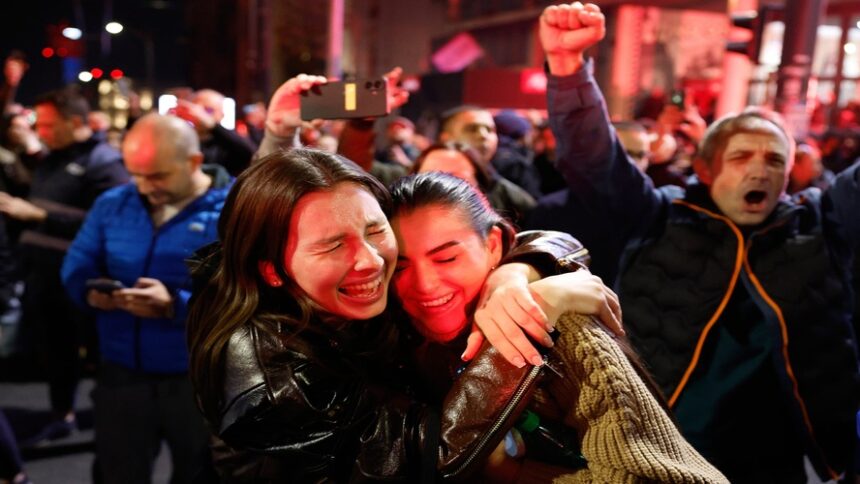
A European Parliament delegation observed Serbia’s parliamentary elections this weekend (Sunday, 25 October) as part of the international election observation mission coordinated by the OSCE.
Led by S&D MEP Andreas Schieder, the delegation assessed the electoral process against international democratic standards, with preliminary findings expected early in the coming week.
A delegation of seven MEPs joined the international election observation mission to Serbia, to monitor the country’s elections.
Speaking ahead of the findings, an S&D spokesman said, “The people of Serbia deserve free and fair elections, respect for the rule of law and the freedom to choose their country’s future.”
Meanwhile, Bulgaria also headed to its presidential elections on Sunday.
The poll has raised questions about the role of Roma, the largest minority in the country.
The Roma Foundation for Europe says that though often considered as having no political capital, Roma have played a “key role in departing from historic voting patterns in Hungary and Romania to bring pro-European parties in power.”
It says, “Roma participation in Bulgaria is often shaped by vote-buying and controlled voting, where party brokers exploit economic hardship and offer cash or goods, collect identity documents ahead of elections, and require voters to photograph ballots on election day as proof of compliance – often with little consequence.”
The foundation and experts warn that this must change.
Comment comes from Mensur Haliti, Vice President for Democracy at the Roma Foundation for Europe.
Haliti said: “Roma experience this reality first-hand.
“They account for roughly ten percent of Bulgaria’s population, yet there are currently zero Roma members of parliament.
“At the same time, Bulgaria has held several parliamentary elections in four years without producing durable governance or expanding political representation. This is structural exclusion, not political apathy.”
“For years, the country has maintained a facade of EU democracy while entrenched oligarchic interests and Kremlin-aligned ideas have shaped political life.
“Bulgaria’s political system was designed to extract Roma participation to legitimize elections, while ensuring that this participation never translates into representation, decision-making power, or accountability, and it has worked exactly as intended,” he added.











Leave a comment