

The Hellenistic Period spanned from 323 BC, following the death of Alexander the Great, to 31 BC, marked by the Roman conquest after the Battle of Actium.
This era saw the widespread diffusion of Greek culture, language, art and science across the Eastern Mediterranean, Egypt, and parts of Asia due to Alexander’s earlier conquests. Major centres like Alexandria in Egypt and Antioch flourished in philosophy, astronomy, and mathematics. The period was characterised by the blending of Greek and Eastern influences, creating a unique cultural and artistic synthesis. It ended as Rome absorbed Ptolemaic Egypt, the last Hellenistic kingdom into its expanding empire.
Cyprus, an island of immense strategic and economic significance in the eastern Mediterranean, underwent significant transformations during the Hellenistic period.
The conquest of Alexander the Great in 333 BC and the subsequent rule of the Ptolemaic dynasty reshaped the island’s political landscape, economy, and culture.
We examine the profound impact of Alexander’s conquest and the Ptolemaic administration on Cyprus, exploring its shifting political affiliations, economic developments, and cultural Hellenisation.
Conquest of Cyprus
The campaign of Alexander against the Persian Empire in the late fourth century BC had direct consequences for Cyprus.
At the time, the island was divided into several city-kingdoms, including Salamis, Kition, and Paphos, which had been under Persian suzerainty. In 333 BC, as Alexander advanced through the Near East, the Cypriot kings saw an opportunity to shift their allegiance to the Macedonian conqueror. Their decision to support Alexander proved pivotal in his successful siege of Tyre in 332 BC, as Cypriot ships played a crucial role in the naval blockade of the Phoenician city.
With the fall of Tyre, Cyprus was effectively liberated from Persian control and became integrated into Alexander’s growing empire. Although Alexander did not impose direct rule over the island, Cypriot city-kingdoms were granted a degree of autonomy under Macedonian hegemony. This period marked the beginning of significant Greek influence on Cypriot governance and culture, laying the groundwork for the later Ptolemaic administration.
The Ptolemaic Rule
Following Alexander’s death in 323 BC, his empire fragmented as his generals, the Diadochi, fought for control. Cyprus became a contested territory among these successor states, but ultimately fell under the influence of Ptolemy I, one of Alexander’s most trusted generals and the founder of the Ptolemaic dynasty in Egypt.
Ptolemy I initially secured Cyprus by defeating rival forces, and by the early third century BC, the island was fully integrated into the Ptolemaic realm. The Ptolemies abolished the independent city-kingdoms and centralised authority under a single governor, directly appointed from Alexandria. This shift in governance ensured tighter control over the island, which played a crucial role in Ptolemaic military and naval strategies.
Economic Impact
Under Ptolemaic rule, Cyprus became a vital economic asset. The island was rich in natural resources, particularly copper, which had been a cornerstone of its economy since the Bronze Age. The Ptolemies exploited these resources extensively, using Cypriot copper for their war efforts and trade networks. Additionally, Cyprus became an important hub for agricultural production, supplying Egypt with timber, grain, wine, and olive oil.
Trade flourished under the Ptolemies, as Cyprus occupied a strategic position linking the Aegean, Levant, and North Africa. The island’s harbours, particularly those of Salamis and Paphos, became essential nodes in the Ptolemaic maritime network. The introduction of standardised coinage further facilitated trade and economic stability, aligning Cyprus more closely with the Hellenistic world’s commercial practices.
Culture and Religion
One of the most lasting impacts of Ptolemaic rule was the acceleration of Hellenisation on the island. Greek became the dominant language of administration, literature, and daily life, replacing earlier scripts such as the Cypriot syllabary. This linguistic shift reinforced Cyprus’s integration into the Hellenistic world and fostered closer cultural ties with the Greek mainland and Alexandria in Egypt.
Religious practices in Cyprus also evolved under the Ptolemies. While traditional Cypriot deities, such as Aphrodite (who had long been worshiped at Paphos), remained prominent, there was an increasing amalgamation with Greek religious traditions. Egyptian deities like Isis and Serapis, promoted by the Ptolemies, also found a place in Cypriot religious life, reflecting the multicultural nature of the Hellenistic era.
Architecturally, the influence of Greek styles became more pronounced. Cities saw the construction of grand temples, theatres, and public buildings modelled after those in mainland Greece and Egypt. The adoption of Greek urban planning further emphasised Cyprus’s role as a Hellenistic stronghold.
Military and Strategic Importance
Cyprus’s location made it a valuable military asset for the Ptolemaic dynasty, particularly in their conflicts against the Seleucid Empire. The Ptolemies established naval bases on the island, using Cypriot ports as launching points for campaigns in the eastern Mediterranean. The island’s strategic importance meant that it was frequently contested, especially during the Syrian Wars between the Ptolemies and Seleucids.
Despite periods of instability, Cyprus remained a crucial part of the Ptolemaic realm until the second century BC, when Ptolemaic influence began to wane. By the mid-second century BC, Rome’s growing power in the eastern Mediterranean signalled a shift in Cyprus’s political future.
Transition to Rome
By the late Hellenistic period, Ptolemaic control over Cyprus weakened due to internal strife and external pressures. The Seleucids briefly occupied the island during the second century BC, though the Ptolemies later regained control. However, the island’s autonomy diminished as Rome increasingly intervened in Hellenistic affairs.
In 58 BC, Cyprus was officially annexed by the Roman Republic. The transition from Ptolemaic to Roman rule marked the end of the island’s Hellenistic era but did not erase the profound Greek influences that had shaped Cyprus over the previous centuries. Many aspects of Hellenistic administration, culture, and religious practices persisted well into the Roman period, underscoring the lasting impact of Alexander’s conquest and Ptolemaic governance.
Hellenistic Architecture
Cyprus experienced significant architectural transformations due to the influence of Greek and Ptolemaic rule. The island, previously shaped by Phoenician, Egyptian, and indigenous Cypriot traditions, became increasingly Hellenised, adopting Greek urban planning, building techniques, and artistic styles.
One of the most prominent aspects of Hellenistic architecture in Cyprus was the construction of grand temples, theatres, and public buildings modelled after those in mainland Greece and Egypt. The Temple of Aphrodite at Paphos, which had been a major religious centre since the Bronze Age, was expanded and incorporated more Greek architectural elements, including columned facades and decorative friezes. Similarly, the sanctuary of Apollo Hylates at Kourion featured classical Greek temple designs with Doric and Ionic columns, reflecting mainland influences.
Theatres became a hallmark of Hellenistic urban culture. The Kourion Theatre, built in the 2nd century BC, followed a semi-circular design typical of Greek theatres, with tiered seating and an orchestra pit for performances. Other cities, such as Salamis, also saw the construction of grand public buildings, including gymnasiums, agoras, and baths, aligning with Greek ideals of civic life.
Hellenistic architecture in Cyprus showcased a blend of Greek artistic refinement and local Cypriot traditions, shaping the island’s urban and cultural landscape well into the Roman period
Conclusion
The Hellenistic period was a transformative era for Cyprus, shaped by the conquests of Alexander and the administration of the Ptolemies. The island’s political landscape shifted from Persian rule to Macedonian influence and later Ptolemaic centralisation. Economically, Cyprus flourished as a vital hub in the eastern Mediterranean, while cultural and religious Hellenisation reinforced its connections to the wider Greek world. Militarily, Cyprus played a crucial role in the Ptolemaic defence strategy, underscoring its strategic significance. Although Ptolemaic rule eventually declined, the Hellenistic legacy endured, leaving a profound and lasting mark on Cypriot history.
Alexander the Great
Alexander’s campaign against the Persian Empire (334–330 BC) was one of the most significant military conquests in history.
The Persian Empire, under King Darius III, was the dominant power in the ancient world, stretching from the Aegean Sea to the Indus Valley. Alexander, the young king of Macedon, launched his invasion in 334 BC, seeking to fulfil his father Philip II’s vision of conquering Persia and uniting the Greek world under his rule.
His campaign began with a decisive victory at the Battle of the Granicus (334 BC), which secured Asia Minor. He then advanced south, capturing key cities and defeating Darius III at the Battle of Issus (333 BC). Following this victory, Alexander turned toward the eastern Mediterranean, systematically dismantling Persian naval power. The Siege of Tyre (332 BC) and the conquest of Egypt further solidified his dominance.
In 331 BC, Alexander dealt a final blow to the Persian Empire at the Battle of Gaugamela, where his superior tactics and leadership led to the collapse of Persian resistance. Darius III was later assassinated by his own men, and Alexander assumed the title of “King of Asia,” marking the end of the Persian Empire and the beginning of Hellenistic rule.
The Siege of Tyre in 332 BC was one of Alexander’s most challenging military campaigns during his conquest of the Persian Empire. Tyre, a heavily fortified island city off the coast of modern-day Lebanon, was a major naval and trade center of the Phoenician world. Its strong walls and powerful fleet made a direct assault nearly impossible. To overcome this obstacle, Alexander devised a dual strategy: constructing a massive causeway to connect the island to the mainland while simultaneously enforcing a naval blockade to cut off supplies and reinforcements.
Cypriot ships played a crucial role in this blockade, significantly contributing to Alexander’s eventual success. At the time, Cyprus was home to several city-kingdoms that had previously been under Persian influence but switched allegiance to Alexander as his campaign progressed. Their fleets joined Alexander’s growing naval force, working alongside Phoenician ships that had defected from Persian control. The Cypriot navy helped neutralise Tyre’s fleet, ensuring that the city was completely surrounded and unable to receive aid. With the blockade in place, Alexander’s forces completed the causeway, breached Tyre’s defences, and captured the city. This victory secured Alexander’s dominance over the eastern Mediterranean and demonstrated the strategic importance of Cypriot naval power.
The Ptolemies
Following the death of Alexander in 323 BC, his vast empire was divided among his generals, the Diadochi. Cyprus became a contested territory, but it ultimately fell under the control of Ptolemy I Soter, one of Alexander’s most trusted commanders and the founder of the Ptolemaic dynasty in Egypt. By the early third century BC, the Ptolemies had fully integrated Cyprus into their expanding realm, recognising its strategic and economic importance in the eastern Mediterranean.
Under Ptolemaic rule, Cyprus saw significant administrative, military, and economic changes. The independent city-kingdoms that had previously governed the island were abolished, and Cyprus was placed under a single Ptolemaic governor (strategos), appointed directly from Alexandria. This centralised control allowed the Ptolemies to effectively manage Cyprus as a key military and naval base. Its harbours, particularly Salamis and Paphos, played a vital role in securing Ptolemaic dominance against rival Hellenistic powers, particularly the Seleucid Empire.
Economically, Cyprus flourished under the Ptolemies. The island was rich in copper, which was crucial for coinage and weapon production. Additionally, it supplied Egypt with essential resources like timber, grain, wine, and olive oil. Trade networks expanded, connecting Cyprus to the wider Hellenistic world, and a standardised Ptolemaic currency was introduced to facilitate commerce.
Culturally, Hellenisation accelerated as Greek became the administrative and common language. Greek architecture, religious practices, and artistic styles became dominant, although traditional Cypriot and Egyptian influences persisted. The worship of Aphrodite at Paphos continued, but Egyptian deities like Isis and Serapis also gained popularity.
Despite challenges from rival powers, Cyprus remained a crucial Ptolemaic stronghold until 58 BC, when it was annexed by Rome, marking the end of Ptolemaic rule on the island.
Cleopatra
During the late Ptolemaic period, Cyprus played a significant role in the power struggles between Cleopatra VII, Marc Antony, and Rome. As the last ruler of the Ptolemaic dynasty, Cleopatra sought to maintain Egypt’s influence over Cyprus, recognising its strategic value in controlling Mediterranean trade and naval operations.
After Julius Caesar’s assassination in 44 BC, Cleopatra aligned herself with Marc Antony, one of Rome’s most powerful generals. Antony, in his efforts to strengthen Cleopatra’s position, granted Cyprus to her in 40 BC, restoring the island to Ptolemaic control after it had been annexed by Rome in 58 BC. This move solidified Cleopatra’s power and provided her with essential resources, including naval forces, wealth, and grain supplies, which were crucial for her ambitions in the eastern Mediterranean.
Cyprus became an important naval base for Cleopatra and Antony during their conflict with Octavian (the future Emperor Augustus). However, their fortunes declined after their defeat at the Battle of Actium in 31 BC. As Octavian pursued them, both fled to Egypt, where they ultimately took their own lives in 30 BC. With their deaths, Cyprus was permanently absorbed into the Roman Empire, marking the definitive end of Ptolemaic rule in the Mediterranean.
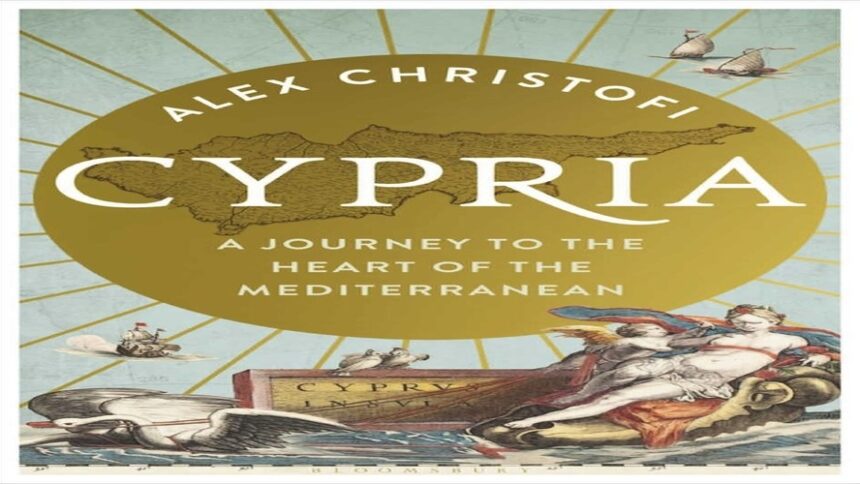
Cypria: A Journey to the Heart of the Mediterranean. Author: Alex Christofi.
Source: Parikiaki.com












Leave a comment