
By Martin Banks
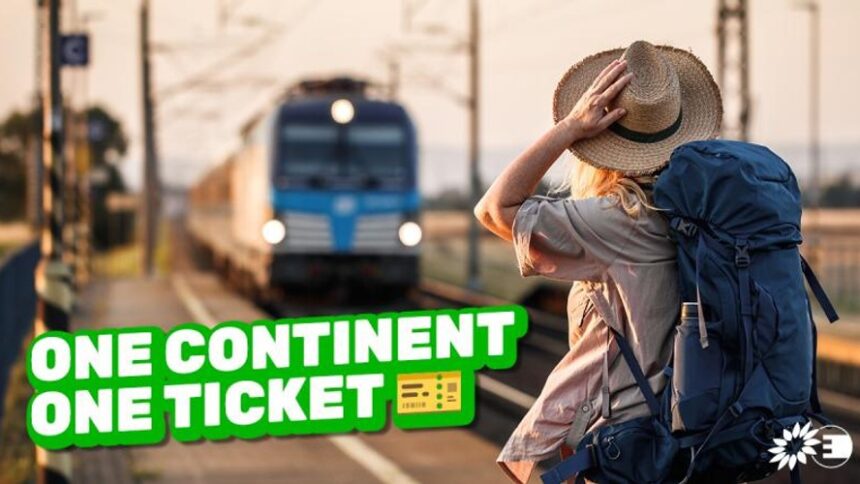
MEPs have generally welcomed the new, long-awaited EU Passenger Package.
This package is aimed at improving cross-border rail travel and strengthening passengers’ rights across Europe.
The S&D Group in the EU parliament said it hopes that the package will be an “important step” leading towards a “more seamless, sustainable, and resilient European transport system.”
MEPs voted against a push by EU ministers to weaken air passenger rights, which have been in force since 2004 and the purpose of which are to ensure passengers are sufficiently protected against travel disruption.
The Socialists and Democrats say they have consistently advocated for “simpler, fairer, and more accessible” ticketing systems that make rail the “obvious choice” for travel across Europe.
Europeans, it says, should be able to book international train journeys as easily as flights, while benefitting from full consumer protection throughout their trip.
“At a time when Europe faces growing climate, energy, and security challenges, investing in rail and climate-friendly transport is essential for both sustainability and resilience,” says the Group.
Dutch member Mohammed Chahim, vice-president of the S&D Group on the matter, added, “Europe cannot credibly talk about the green transition, competitiveness, and resilience while it is still easier to book a flight than a cross-border train journey through Europe.”
The EU Passenger Package, also known for some as the Ticketing Package, is an opportunity to bring European rail travel into the 21st century with seamless booking systems, transparent pricing and stronger passenger rights.
The MEP said, “Our Union needs a transport system that remains robust when under pressure. The energy crisis, climate impacts and the security situation have shown that we cannot build our mobility on vulnerable bottlenecks and fragmented systems.
“More traffic needs to move onto rail, both for the climate and for Europe’s resilience. This requires better capacity on the tracks and a ticketing system that makes rail a practical and reliable option for every passenger.”
Further reaction came from German deputy Kai Tegethoff, Volt MEP and member of the Transport committee, who expressed some reservations.
The MEP commented,”If the Commission’s proposal is truly intended to make a difference, it needs clear minimum obligations: operators must be obligated to share their data with competitors so that travellers don’t have to painstakingly piece information together.
“Today, people live, work, and travel across borders—and purely national railway companies have evolved into international corporations.
“ It is time for our legislation to reflect that. Cross-platform ticket sales must be made possible through fair access and fair negotiations.
“If it is one journey, it must be one ticket.”
From the centre right group EPP, one of its MEPs, Andrey Novakov, noted, “We have made it clear from the beginning that we will not back down on key passenger protections.”
This, he added, includes the three-hour threshold for compensation and the existing compensation levels, quasi-automatic compensation via a pre-filled form in case of cancellation and long delays, and the right for families with young children to sit together free of charge.
He said, “Independent research shows that the current framework significantly helped to reduce delays and thereby benefited our overall economies.
“This effect is even stronger on routes with low competition. This is why we are ready to continue our fight for strong and more predictable rules for both citizens and the aviation industry. Our goal is to find a balance that is fair for everyone.
The rapporteur went on, ”Parliament is ready to continue the fight for clearer and more predictable rules for airlines and a stronger aviation sector, but not at the expense of passengers.
“Our baseline is clear: we are determined to improve rather than dilute air passenger rights.
“We insist that reducing delays has significant overall benefits for Europe’s economy.
“Therefore, the three-hour threshold for compensation, the existing compensation levels, pre-filled forms and enforceable safeguards remain our red lines.
“We are counting on EU transport ministers to reconsider their position so that together we may find a mutually acceptable outcome. Citizens expect us to deliver,” added the Bulgarian deputy.

Related Post







Leave a comment