
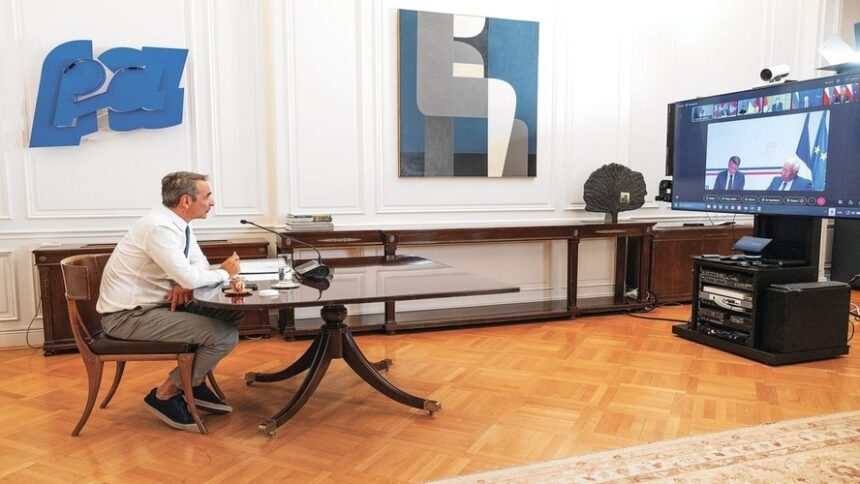

Discussions about changing Greece’s electoral law persist behind the scenes, even as Prime Minister Kyriakos Mitsotakis has repeatedly denied any intention to do so, according to government sources and lawmakers.
A source familiar with conversations within the prime minister’s inner circle said, “Eight out of 10 of Mitsotakis’ interlocutors tell him that the electoral law should be changed.” Lawmakers and aides reportedly continue to press proposals for revisions, forming groups around different scenarios.
The debate is fueled by the prolonged stagnation of the New Democracy party below 30% in opinion polls and tense relations with other parties, which limit the potential for coalition partnerships, officials said. Supporters of change cite several reasons. The party’s earlier adoption of a more modest bonus system for the leading party, intended to encourage a cooperative political climate, was not recognized by opposition parties as a conciliatory gesture. New Democracy also faces no clear potential allies; the PASOK party has signaled it would not align with the government, even joining with smaller parties on positions opposed to New Democracy.
“It may be difficult for the prime minister to shift from a stance he has defended publicly many times,” said a close associate, “but the situation may ultimately leave him little choice.”
Proposed changes include reverting to the “Pavlopoulos law,” granting 50 bonus seats to the first party regardless of vote share, adjusting the threshold for additional bonus seats, and raising the minimum entry for smaller parties to Parliament from 3% to 5%.
Under the current law, the leading party receives 20 bonus seats at 25% of votes, gaining one additional seat per 0.5% over that threshold, up to 50 seats.
Source: Ekathimerini.com










Leave a comment