
By Martin Banks
Humanitarian aid will remain “a beacon of hope”
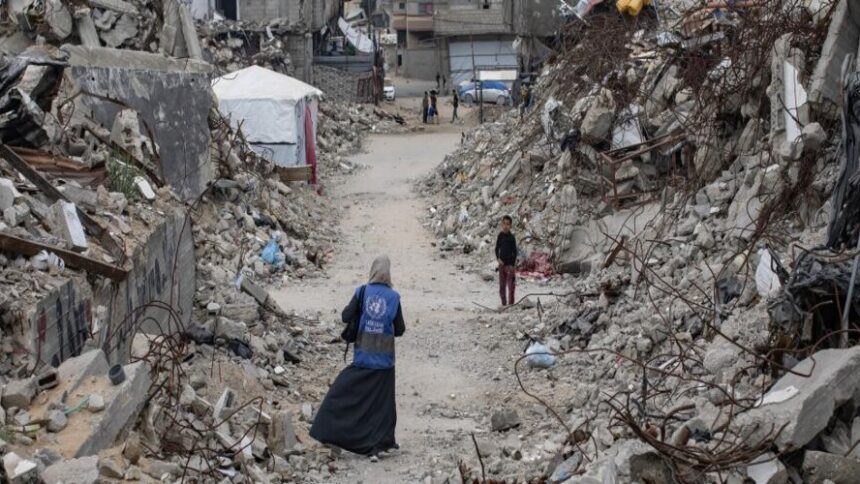
Every day, thousands of humanitarian workers risk their lives helping people in conflict and disaster zones.
At times, unfortunately, they themselves become victims and need assistance.
Sometimes they are targeted because of the work they do.
Humanitarian work has become more dangerous in recent years. Attacks against humanitarian personnel, whether deliberate or not, continue and require joint efforts to address them
Local and national frontline workers face the greatest risks – whether they are employed formally by international, national or local organisations, or are working outside the aid system. In fact, national workers account for 90% of the individuals attacked.
Despite this, national staff remain the least protected.
The EU-funded Protect Aid Workers project supports humanitarian staff who experience critical incidents in the line of duty, ensuring their safety and recovery. It runs a rapid-response mechanism that can provide, on short notice, financial support of up to €10,000 towards incident response and protection of aid workers and supports aid workers who are or have been threatened with arrest and detention.
It also monitors the situation of aid workers and raise awareness about their need for protection and promotes the exchange of good practices in duty of care for staff.
To coincide with this year’s World Humanitarian Day – 19 August – Commissioner for Equality, Preparedness and Crisis Management, Hadja Lahbib, has warned that humanitarian aid – and law – is “under threat” now more than ever.
The commissioner told this site, “The EU is one of the world’s largest humanitarian aid donors, working to save millions of lives in crisis situations globally.
“Yet at a time when humanitarian needs are reaching new heights, respect for International Humanitarian Law (IHL) is under threat. Targeted attacks on civilians and aid workers, along with the attacks against hospitals, schools, and other civilian targets are surging, while access to lifesaving aid is increasingly denied.”
What is fact is that the “rules of war” established by the Geneva Conventions in 1949 remain unchanged and the official says that “violating IHL is a crime.”
She adds, “Never has delivering humanitarian aid been so dangerous – 2024 was the deadliest year on record for aid workers with 383 killed, 308 wounded and 125 kidnapped. With 265 aid workers killed in 2025, we risk surpassing last year’s tragic record.
“With blatant violations of International Humanitarian Law occurring openly, we must confront the harsh reality of widespread impunity where perpetrators go unpunished. Without accountability for the killing of aid workers, more will die.
“There are concrete steps we can take to support those risking their lives to deliver food, water, and medical care to people in need.”
Local aid workers, 90% of those attacked, often lack the protection of international staff, she adds.
The EU’s Protect Aid Workers rapid-response programme supports local humanitarians under fire, currently aiding 376 workers in 211 critical incidents.
As humanitarian crises become increasingly protracted, the world’s attention must stretch beyond the most visible emergencies, says the EU official.
She goes on, “The man-made humanitarian crises in Sudan, Gaza, and Ukraine have rightfully commanded global outrage. Yet countless other crises unfold beyond the spotlight.
“Humanitarian aid will remain a beacon of hope, even in the darkest of times, and the EU’s support will be steadfast.
“Yet, I know that while humanitarian aid is essential, it is not enough on its own. Ending the suffering caused by conflicts and man-made crises requires courageous political leadership and action to forge lasting peace and protect the most vulnerable.”









Leave a comment