
By Martin Banks
The prestigious Global Tourism Forum Annual Meeting 2026 is taking place in Brussels this week.
The event opened in Brussels on Monday (9 November), bringing together ministers, ambassadors, investors and industry leaders under the title “Tourism in a New Global Era”.
Speakers at the opening ceremony argued that investment, security and trust cannot be separated, at a time when conflict, economic uncertainty and climate change are changing how people travel.
The Forum is an international platform bringing together governments, investors, industry leaders and global institutions to shape the future of tourism.
Through high-level meetings, investment summits and strategic partnerships,it seeks to promote sustainable growth, cross-border cooperation and new investment opportunities across the global visitor economy.
Each gathering is designed to connect decision-makers, generate meaningful dialogue and transform shared ideas into lasting economic impact.
Speaking at the opening, Dr István Ujhelyi, president of Capital European Affairs and global vice president of Hiseas International, compared tourism to “the air we breathe”: something people take for granted until it disappears, as the Covid-19 years showed.
He listed problems the industry has yet to solve, including staff shortages, visa barriers and the lack of a global system to support small businesses and stranded travellers in a crisis.
“We have a voice. It still carries too little weight,” he said. He called for a global tourism pact and described tourism as “the industry of peace”.
Patrick Bontinck, chief executive of visit.brussels, welcomed delegates to “a small city with a very big address book”, home to the European institutions, NATO and one of the world’s largest diplomatic communities.
He acknowledged the pressure of overtourism, the climate impact of travel and housing shortages, but argued that tourism is “not only the problem” and can be part of the solution. “
Bontinck compared tourism to a medicine whose dose matters.
He urged destinations to manage the balance between visitors and residents, work with other cities and measure value beyond visitor numbers.
With walls going up amid geopolitical tensions, he said, “it has never been more important for people to meet, to know each other, and to understand each other”.
Another speaker was Bulut Bağcı, president of the World Tourism Forum Institute, the organisation behind the forum.
He explained why investment, security and trust belong in the same conversation.
“Investment needs confidence, travel needs confidence, and confidence grows when people feel safe and know what to expect,” he said.
He argued that “tourism is not a sector; it’s infrastructure”, and pointed to connectivity, security in its widest sense, from passenger safety to data protection, and artificial intelligence, while stressing the need to keep investing in people. He encouraged participants to ask direct questions and “take the conversation forward” after leaving Brussels.
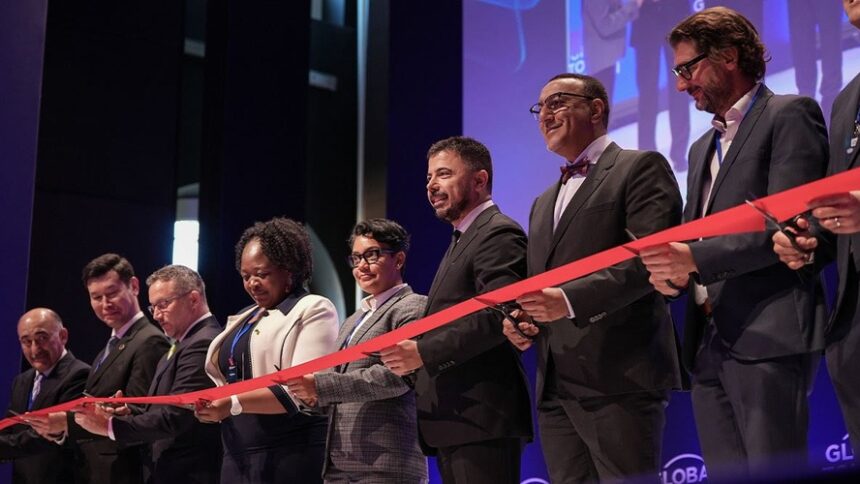
The ceremony on Monday ended with a ribbon cutting with the event’s partners and a performance by the Brussels City Ballet.
The two-day programme of panels, keynotes and ministerial and diplomatic discussions is taking place at the Royal Museums of Fine Arts of Belgium.
Monday’s sessions covered where tourism investment is flowing and what it takes to turn plans into projects that can attract funding.
Delegates discussed hotel development, transport links and how to build climate resilience into new projects.
On Tuesday the focus turned to security and traveller confidence.
Sessions will look at keeping borders secure while making them easier to cross, protecting traveller data and safeguarding passengers across aviation and maritime transport. A final panel will examine how destinations can prepare for climate disruption and public health emergencies.
The forum closes with the Brussels Agenda for Tourism Investment and Security.
- Photo credit: Global Tourism Forum



Leave a comment