
By Martin Banks
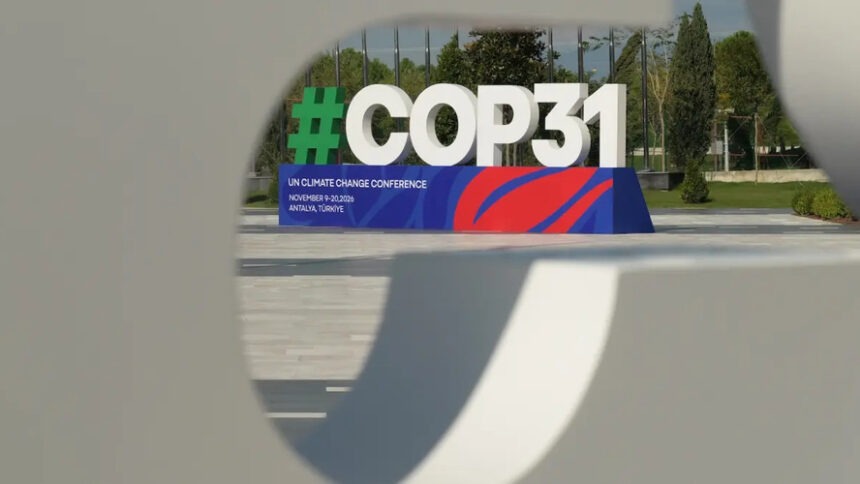
The annual UN climate conference – UNFCCC COP31 – started in Türkiye on Monday, 9 November.
World leaders and negotiators will this week gather in Antalya, Turkey, for COP31. Antalya will be a crucial moment for the world to move forward on the phase-out of fossil fuels, at a time when record heatwaves, floods and wildfires show the climate crisis is already here.
For many the EU’s role will be essential in securing global momentum in the fight against climate change.
Campaign group, Climate Action Network (CAN) Europe, has outlined what it says are the key political tests facing governments at this year’s UN climate negotiations.
It says, “Governments have already agreed on much of the direction of travel. What is missing is delivery: transitioning away from fossil fuels, scaling up electrification powered by renewable energy, making the just transition real, and providing the finance developing countries need to implement climate action and protect people from worsening climate impacts.”
Chiara Martinelli, Director at CAN Europe, said: “COP31 cannot become another climate summit where governments at best congratulate themselves for promises they have already made.
“Implementation means concretely moving away from fossil fuels, putting money on the table and making sure the transition works for people. We need progress on all of these fronts. These pieces have to move together.”
Elsewhere, EU regions and cities are calling to formally recognise cities and regions’ role in delivering global climate goals on the ground, and to provide them adequate support to pursue decarbonisation efforts and strengthen resilience against the consequences of climate change.
Seven members of the European Committee of the Regions (CoR) form part of the official EU delegation at the UNFCCC COP31.
The CoR delegation led by Kostas Bakoyannis (EL/EPP), member of Athens City Council and chair of the CoR’s Commission for the Environment, Climate Change and Energy (ENVE), will be carrying the voice of Europe’s cities and regions to the international climate negotiations during the first week of the conference.
“Our message is clear: COP31 must be the COP of implementation. Commitments are already on the table; now we must turn them into tangible results for citizens. Delivery happens locally: through faster electrification, investment in renewables, and by protecting people from the extreme weather events. To deliver global goals, sub-national governments need the right mandates, better direct access to climate finance and a structured role in shaping global climate decisions, not just a consultation at the very end,” Bakoyannis said.
Meanwhile, the organisation of African, Caribbean and Pacific States (OACPS) signatories of the Samoa Agreement, have reaffirmed their commitment to the full implementation of the Paris Agreement and to strengthening their cooperation on climate action ahead of COP31.
In a joint statement, partners underline the urgency of accelerating global efforts to limit global warming to 1.5°C, highlighting the particular vulnerability of developing countries. With a view to COP31 and beyond, the EU and OACPS identify six priority areas for strengthened cooperation: climate adaptation and resilience; access to climate finance; clean electrification and a just energy transition; climate data, science, technology and capacity-building; resilient food systems, water and ecosystems; and international ocean governance.









Leave a comment