
By Martin Banks.
The European bio-based sector can contribute towards a successful energy transition, a major conference has been told.
The potential of the bioeconomy in the green transition was a key theme at the two-day stakeholder forum.
It was hosted by the Circular Bio-based Europe Joint Undertaking (CBE JU), a €2 billion public-private partnership advancing the European bio-based sector.
The event, attended by more than 500 delegates, heard there is an urgent need in Europe to move from fossil-based to bio- based production and consumption.
Held at The Egg venue in Brussels, the gathering brought together industry leaders, experts, researchers, policymakers and enthusiasts from Europe and beyond.
One of the participants and speakers was Marc Lemaître, of the European Commission, who said, “Europe needs to move from the linear to the circular model of economy and the European Green Deal is making much better use of the resources.”
CBESF23 – CBE JU Stakeholder Forum 2023 – sought to provide a platform for “thought- provoking” discussions, showcasing cutting- edge technologies and inspiring actionable solutions “for a greener future.”
It showcased the latest advancements in the bio-based sector, sustainable practices, and their impact on the European and global landscape.
Over 50 renowned speakers representing the bio-based sector, industries taking up bio- based solutions, research and innovation providers, public sector, local authorities and other stakeholders shared insights on what drives the sector’s contribution towards a sustainable future for Europe.
Nine panel discussions explored key challenges and opportunities in the bio-based sector, across three themes:
· How to stimulate demand for circular bio-based solutions?
· How to facilitate access to finance to scale up circular bio-based production in Europe?
· What R&I is needed to keep the European leadership in bio-based sector in the medium-long term.
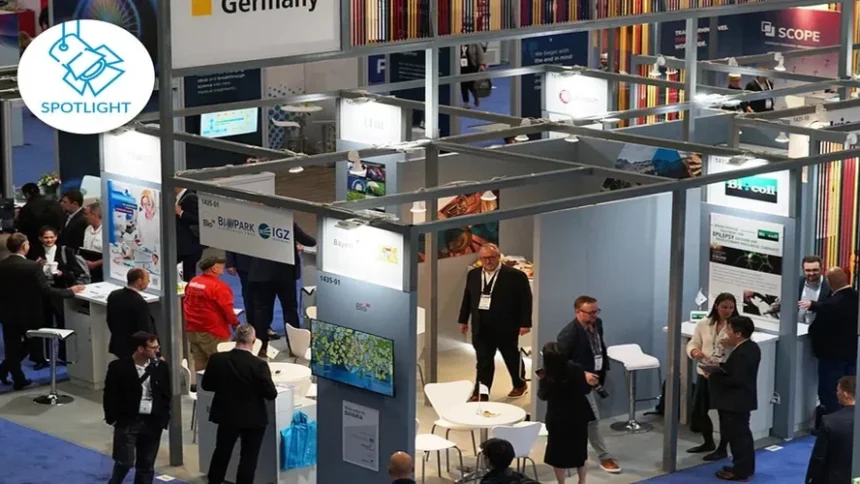
An exhibition of 30 innovative bio-based solutions made by CBE JU-funded projects demonstrated the industry’s commitment to pushing the boundaries of technological advancements and the readiness of these solutions for market uptake.
Elsewhere, two workshops focussed on measures to support a successful bio- based sector’s roll-out in Europe: providing the education and training that address the skills needed in the sector and making the sector attractive for young professionals.
Over 500 participants from over 40 countries were present, representing the private sector (35%), research and education (27%) and the public sector (17%). Some 35% of all participants came from small and medium businesses.
The event heard that CBE JU is a “success story” in advancing the European bio-based sector by de-risking investments and engaging a fragmented stakeholder community around a common goal. An event spokesman said, “Bio-based production must reach beyond the replacement of fossil-based products with bio-based ones: it has to be circular, minimise the use of natural resources and consider environmental, social and economic impacts.”
“The regional dimension is key in the bioeconomy, since biomass is locally sourced and the bio-based sector is an important booster of local economies. Regions are also important drivers of innovation.”
“The European bio-based sector needs to present a strong common narrative to support the take-up of bio-based solutions by both large industries and consumers.”
The spokesman added, “The shift from fossil- based to bio-based production and consumption requires consistency in legislation and policy objectives, supportive industrial regulation, access to finance, and adapted standardisation.
“The transition to a circular bio-based economy can only happen through true collaboration among all stakeholders, ranging from primary producers to researchers, to small businesses and large industries as well as acceptance by consumers.”
Catia Bastioli, CEO of Novamont represents CBE JU’s private partner the Bio-based Industries Consortium and opened the forum. Bastioli said the bioeconomy “should be a pillar of the Green Deal to rethink the production, use and end-of-life of bio- products, wasting nothing and promoting participatory innovation.”
Also commenting, Nicoló Giacomuzzi-Moore, CBE JU Acting Executive Director, wants the bioeconomy “to be at the heart of the green transition, seeing the concrete results achieved by our community.”
“Europe must lead this revolution making the best of its talents, achieving a high level of sustainability, social fairness and inclusion, and industrial competitiveness.”








Leave a comment