EUROPE
EU consumers feel food costs are unfairly distributed, says research
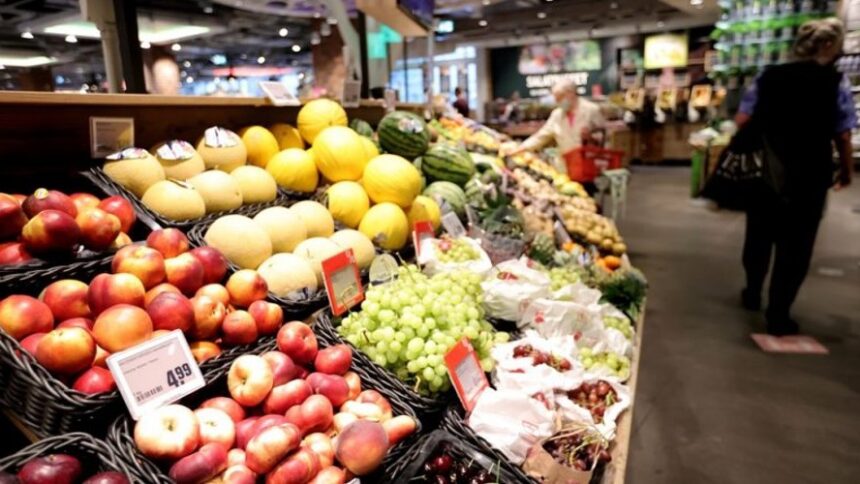
Increases in food prices and shortages worry most European consumers, new research reveals, while nearly half of those surveyed believe these costs are being unfairly distributed across the continent.
In the run-up to the winter celebrations, consumers in Europe are cutting back on food costs to cope with shortages and rising prices, according to a survey of 5,000 people in 10 European countries.
Data shows that most consumers think the war in Ukraine has increased food prices in Europe, while many point to an uneven scattering of these costs and the profits made from the war.
“Nearly half think that these costs are being unfairly distributed, with 48% of those surveyed believing that the war has enabled food retailers and manufacturers to make more profit,” reads a statement by the researchers.
The research was conducted by a consortium of universities in Europe and led by Aarhus University with the support of the European Institute of Innovation and Technology (EIT Food).
Earlier this year, Oxfam International reported that the fortunes of food and energy billionaires have risen by more than €400 billion – or $453 billion – since 2020, which equals $1 billion profit every two days.
The products in which shoppers felt prices have spiked the most are animal products, such as red meat (55%), fish (52%), and dairy (51%).
According to the survey, this has led to nearly four in 10 consumers (37%) buying less red meat, while a third are buying less fish and poultry (33% for each).
Other ‘cost-saving behaviours’ observed by researchers are the switch to cheaper brands and stores to continue filling the shopping basket.
Although, some consumers are opting to completely cut back on certain items from their groceries, according to the study. These are mainly convenience food (12%) – e.g. prepared meals – and alcoholic drinks (10%).
Rising poverty or ‘more deliberate’ choices
In 2021, 7.3 % of the overall EU population could not afford a meal with meat, fish or a vegetarian equivalent every second day, according to Safe Food Advocacy Europe.
Similarly, the research led by European universities found that rising food prices have pushed consumers to make ‘more deliberate’ purchasing choices.
In other words, over half of those surveyed said they check prices more than before the pandemic, while four out of ten claims they make fewer unplanned purchases. This represents an increase of 35% and 26%, respectively, since 2020.
Klaus Grunert, professor at Aarhus University, hopes that, despite the crisis in Ukraine and global economic downturn present unique and considerable threats to the European food system, this new research will empower decision-makers to craft informed and timely policies,
For him, these policies must adequately tackle mounting consumer concerns regarding spiralling food costs.
The project is a follow-up study to research conducted in 2020, which identified that COVID-19 lockdown measures may have caused lasting behaviour changes in relation to food consumption.
“Let us not forget that for the less affluent households, simply adapting their food purchase behaviours will not do the trick,” explained Camille Perrin, Senior Food Policy Officer at the European Consumer Organisation (BEUC).
According to her, these households must be supported with adequate social policies throughout the cost-of-living crisis.
“Supermarkets also have a role to play, such as by ensuring that budget ranges are available where consumers need them most,” she continued.
Labels also play a crucial role in consumers’ behaviours, as the research found nearly four in 10 shoppers use them more often to compare products.
Overall, the trend in Europe shows that most people adapted their shopping habits by either paying more attention to food prices or making more ‘mindful choices’ such as checking out labels or seeking ‘food innovations.’
Source: Euractiv.com
Views: 128













Leave a comment