

By Martin Banks
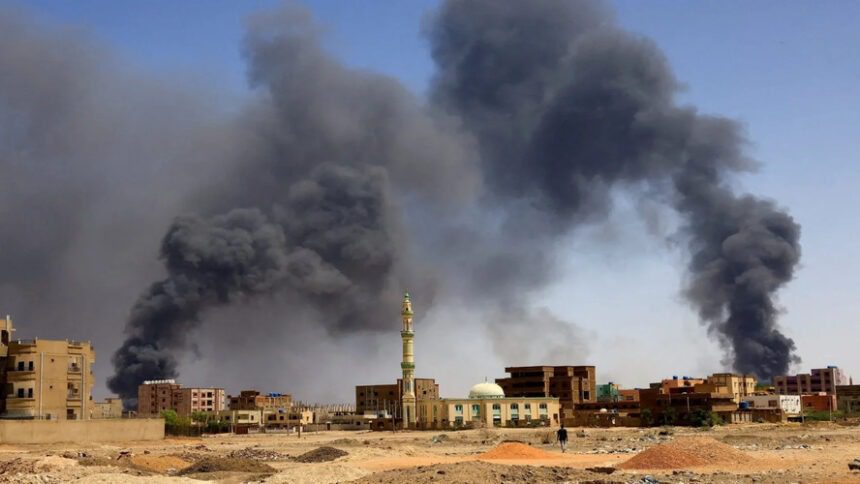
MEPs have held an urgent debate with the EU Commission on the escalation of the war and the humanitarian catastrophe in Sudan.
The debate, in the parliament in Strasbourg on Tuesday (25 November), comes amid mounting calls for a cease fire in the war torn state. MEPs are in France for their monthly plenary.
In the debate, ECR Human Rights Subcommittee Coordinator Arkadiusz Mularczyk warned that the country is facing one of the most devastating crises of recent decades — a crisis that endangers civilians, destabilises Africa, and has direct consequences for Europe.
Mularczyk described how civilians are trapped between brutal paramilitary violence, drought and widespread hunger, with entire communities left without protection.
The MEP told the plenary: “Sudan is facing one of the most serious humanitarian crises of the last decades. Paramilitary groups are killing thousands of civilians, while drought and hunger intensify the suffering.
“They desperately need aid”, he said.
He stressed that the collapse of order in Sudan is not only a tragedy for the Sudanese people, but a growing threat to regional and European stability.
“This is not only a disaster for Sudan, but also for Africa and Europe. When extremists attack civilians and destabilise regions, more people will be forced to flee towards Europe,” he continued.
Mularczyk called for a strong and coordinated international response, including sustained EU sanctions, accountability for those responsible for atrocities, and close cooperation with the United Nations and the African Union.
“We must act decisively. Sanctions must be maintained, those responsible held to account, and we must work with the UN and the African Union to stop the illegal flow of arms.”
The ECR Group says Europe’s immediate priorities must be de-escalation, unhindered humanitarian access, and the conditions for a credible political settlement. Stability and peace in Sudan, Mularczyk noted, will shape the future security of the wider region — and of Europe.
Further comment at the plenary came from the EU commissioner for equality and acting commissioner for crisis management, Hadja Lahbib.
The Belgian official said that “hunger, malnutrition, and disease” are rapidly spreading across the country, while international humanitarian law is being violated.
Lahbib said the outlook in Darfur and Kordofan was “particularly shocking,” recalling last month’s “horrific attacks” against civilians by the paramilitary Rapid Support Forces (RSF) during their capture of El-Fasher and Bara.
The commissioner told MEPs, “Thousands of civilians in El-Fasher have been killed on ethnic grounds, in house-to-house raids, mass detentions. People are unable to leave the city,” she said.
She added: “Three years into a cycle of war, destruction, and atrocities, this is a moment of great concern for Sudan and the entire region.The humanitarian crisis in Sudan is catastrophic. Hunger and malnutrition are soaring. International humanitarian law is being violated. Civilians face growing threats. Conflict-related sexual violence is rising. Disease outbreaks are spreading. Humanitarian access is being blocked at every turn.”
She went on: “What is happening in Darfur and the Kordofan is particularly shocking, especially the horrific attacks on civilians by the Rapid Support Forces during their capture of El Fasher and Bara last month.
“Thousands of civilians in El Fasher killed on ethnic grounds in house-to-house raids; mass detentions; people unable to leave the city; men separated, tortured, and killed; women and girls facing sexual- and gender-based violence; even community kitchen workers targeted and killed.
“Across the country, bureaucratic barriers continue to block humanitarian assistance. We reiterate our call to all parties for safe, full, and unhindered access for humanitarian organisations.”
Responding to the humanitarian crisis in Sudan remains a priority for the European Commission, she told members adding, “We are using every tool we have: funding, air bridges and sea freight, and humanitarian diplomacy.
“This year, we allocated €273.3 million to the humanitarian response for the Sudan crisis, including €161 million for Sudan only. This is the largest EU humanitarian envelope in Africa. This includes a recent €1 million allocation to support people fleeing El Fasher.”
A vote on a European Parliament’s resolution on Sudan will take place on Thursday (27 November).

Related Post







Leave a comment