
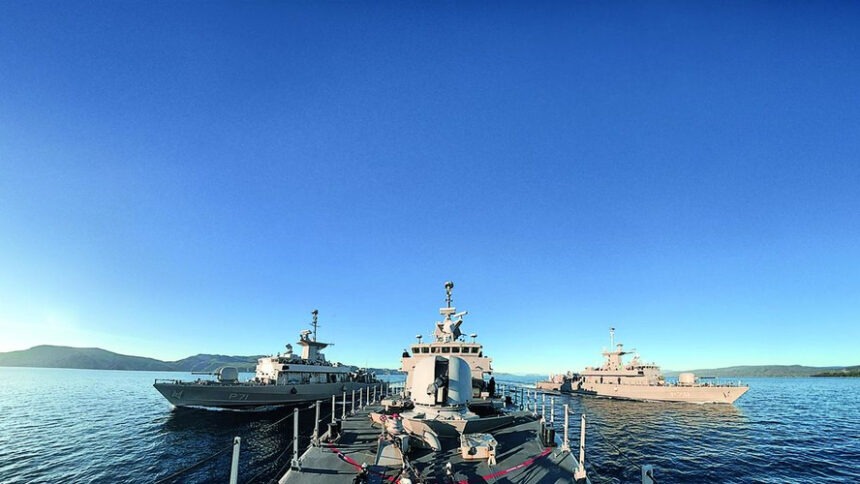

Greece is preparing a range of responses to growing escalation by Turkey following Ankara’s designation of two maritime parks in the northeastern Aegean and near Kastellorizo, as well as the revival of the long-disputed theory of “gray zones” in the Aegean.
Greek officials say Athens is closely monitoring recent Turkish actions, which they believe mark the end of a period of relative calm in bilateral relations. However, the government also argues that a clearer picture of Turkey’s strategy will emerge in the coming weeks through two key developments.
The first concerns the publication of any terms, restrictions or prohibitions that Turkey may impose on activities such as fishing, navigation and research within the maritime parks it has designated. The second is how Ankara responds to the planned resumption of surveys related to the Greece-Cyprus electricity interconnection project.
Athens has already begun implementing some measures. High-level bilateral contacts are effectively being frozen, according to officials. A meeting between Greek Prime Minister Kyriakos Mitsotakis and Turkish President Recep Tayyip Erdogan on the sidelines of the United Nations General Assembly in New York next month is now considered highly unlikely. The same assessment applies to a possible meeting between the countries’ foreign ministers.
Greece is also expected to adopt a tougher position on issues concerning EU-Turkey relations. Beyond Ankara’s exclusion from the SAFE program, Greek Foreign Minister George Gerapetritis is expected to brief his counterparts at the next EU Foreign Affairs Council on the maritime parks designated by Turkey. Athens is expected to oppose progress on issues of strong Turkish interest, including modernization of the customs union, visa liberalization and Turkey’s role as an energy hub connecting Europe with the South Caucasus and Central Asia.
Greek officials also say the possible extension of territorial waters south of Crete to 12 nautical miles has been included among the options under consideration.
Athens accuses Ankara of reviving long-standing claims in the Aegean and Eastern Mediterranean that it says conflict with international law, while also pointing to a recent increase in airspace violations and breaches of air traffic regulations by Turkish aircraft and drones.
Source: Ekathimerini.com






Leave a comment