
By Martin Banks
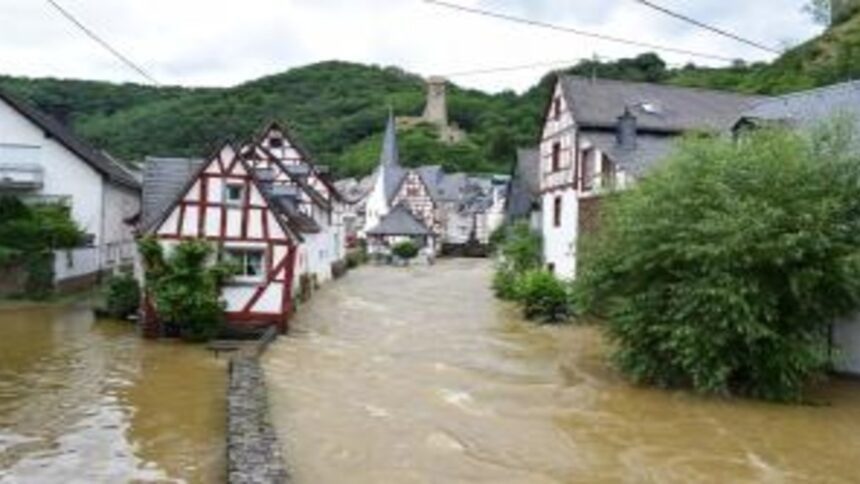
From flooding in northern Italy to torrential rain in Slovenia and submerged subway stations in Paris, extreme weather events have become a reality in EU member states.
Increasingly, heavy rainfall is causing flooded streets, evacuations, and billions in damage, placing enormous strain on cities and municipalities across the continent.
With the EU Strategy for Adaptation to Climate Change, the European Commission aims to make Europe climate-resilient by 2050. Cities and regions are being called on to develop strategies for extreme weather events, supported by targeted EU funding programs such as the LIFE program or the EU “Adaptation to Climate Change” mission.
But recent severe weather events have triggered fresh demands to help tackle such events in the future.
“Comprehensive flood protection and climate-resilient urban planning are crucial for the future of our communities,” says Gregor Grassl, an expert in climate-friendly building and urban development at Drees & Sommer.
One example of climate-effective urban development at the European level is the Horizon project Commit2Green, which is being implemented by Drees & Sommer together with 24 partners.
More than 300 regions and municipalities in Europe are already participating in the mission to develop locally effective concepts. Climate adaptation is moving higher on the European agenda, not only as a challenge but also as an opportunity for more sustainable urban development.
Grassl adds, “Periods of hot weather or rainfall in Europe are now becoming increasingly concentrated and intense – and they can affect every region of the continent, from Scandinavia to the Mediterranean.”
Heavy rain is particularly treacherous because it can be so sudden and so highly localized, which makes it difficult to predict. But the good news, says Grassl, is that, with the right expertise, it is possible for cities to adapt and improve their resilience.
“The condition of the waterways and the capacity of sewer systems are key factors, because overloaded sewer systems are among the most common causes of urban flooding,” said Grassl.
This is why existing flood protection measures need to be reviewed regularly and tested to ensure that they are effective against extreme weather conditions. It is equally essential to ensure that there is access, at all times, to vital infrastructure such as emergency routes, fire stations, hospitals and emergency shelters, argues Grassl.
The centerpiece of adaptation to heavy rainfall events is use of blue-green infrastructure, combining green spaces, water management and modern technology. Parks, green corridors and urban open spaces play a key role
“In this context, another term we use is the sponge city, because green spaces act like a sponge soaking up the rainwater,” the expert explained.
Many cities are dominated by asphalt, concrete and densely laid paving stones – materials that prevent rainwater from penetrating the ground. This water then flows unchecked into the sewer system, which quickly becomes overloaded during heavy rain.
“To counteract this, large areas of these types of surfaces need to be unsealed and replaced with alternative water-permeable options,” said Grassl.
With the Horizon Europe project Commit2Green, Drees & Sommer, together with 24 partners, is supporting eight European cities – including Barcelona, Milan, Warsaw and Mannheim – in developing urban greening and renaturalization strategies.
The aim is to embed nature-based solutions such as sponge-city concepts firmly into urban planning and to make cities more resilient to heat, heavy rainfall, and other consequences of the climate crisis.
The project will run for 4½ years and will be funded with around €11.9 million.

Related Post









Leave a comment