
Interview to Panagiotis Sfaelos
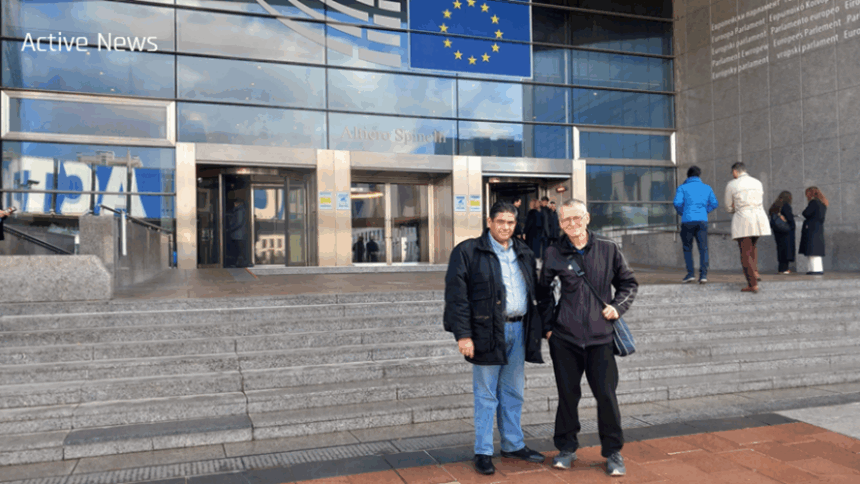
We met with Journalist Martin Banks in Brussels near the Euroepean Parliament and we had a discussion for journalism, EU affairs and politics.
1. What first brought you from the UK to Brussels?
My wife is Belgian and we met here. I came to live here for a short time but am still here.
2. How has working in Brussels changed your approach to journalism?
No big changes. I had been a journo for 21 yrs before I came here: the principles I learned/gained in the UK still apply now. My approach is pretty much the same – good standards and accurate reportage.
3. What kind of stories do you most enjoy covering in the European capital?
In the past, it was covering the EU and the parliament which was my speciality.Now it is geopolitics.
4. How would you describe the media landscape in Brussels compared to London?
I never worked in London but Brussels has its own “bubble” and can be a bit introspective. Then again, the media in the UK, now anyway, is rather inward looking and with v little interest in the EU.
5. What are the biggest challenges for journalists covering the EU institutions?
Trying to dig beneath the layers of press officers that frequent the EU, eg Commission and Parliament and discover human interest stories.
6. Do you think European politics receives fair coverage in the international press?
Probably not: it is sidelined unless it is a negative story and that does not reflect the often good work the EU does.
7. What major developments in the EU do you believe journalists should pay more attention to right now?
A big one is the merging of genuine journalists and those pretending to be journalist eg lobbyists… a big, big difference. A real danger this.
8. How effectively do you think the EU communicates its policies to the public?
It has an army of press officers and does its best in some ways but is still failing to get the message across, sadly.
9. What is the most misunderstood aspect of EU politics among non-EU audiences?
How it can help their everyday lives eg consumer protection and human rights.. these impact on us but few people realise the EU role on such things
10. How has Brexit changed the way British journalists work in Brussels?
It has caused huge issues.. there is now little interest in the UK and it has become that much harder to get the stories one used to get when, eg, the UK MEPs were still here.
11. Do you feel British audiences remain interested in EU affairs today?
Not much.. they have moved on, sadly. there are some people who still do but it is declining… fast.
12. What misconceptions about Brussels do you see most often in UK media?
So many.. hard to know where to start. They think it is just a collection of buildings filled with overpaid eurocrats. that is probably true but the EU is not really even reported now in the UK. It is very sad.
13. In your view, what is the biggest responsibility of a journalist covering European affairs?
To try and ensure those in positions of power are held responsible and have to answer for their actions
14. How do you balance speed and accuracy in a political environment full of complexity?
The million dollar question. You just do your best… accuracy is vital and is the bottom line but,yes, the media landscape now is so much different to how it was just 10 yrs ago, let alone the 46 yrs I have been a journalist
15. How do you evaluate the rise of misinformation around European politics?
Not difficult that one: If the EU’s message is not getting across that leaves a space for other things eg fake news. That is how this happens and it will get even worse I fear.
16. What do you enjoy most about living in Brussels?
I live outside Bxl now but there is diversity here and , tho this is sadly declining, respect and a bit of civility. That is good but, as said, it is changing and not for the better.
17. Does the city inspire your journalism in any way? the city itself?
No ,not particularly but I do admire its diversity and also, this is worth saying, the way it embraces cultures and languages in particular. this IS impressive.
18. How do you see Brussels evolving as an international media centre in the next decade?
Sadly, I see a decline.. with the rise in populism there may be even less interest in the EU and the work done here by the media in coming years. A big shame.
19. What advice would you give young journalists who want to cover the EU?
Embrace the cultures and diversity. It is still a bit of a laboratory – an experiment still in the making – and people in the EU really do want to get a message out there.. as a journo you can enjoy helping to do this, up to a point..
20. What story are you currently working on that excites you the most?
I like geo politics and, with the way the world is evolving so rapidly, there is almost a big new story every day..not just now and then.

Related Post








Leave a comment