
By Martin Banks
MEPs say that the EU needs to “strengthen its global partnerships and enhance its threat deterrence.”
The message comes in the wake of the ongoing bitter row between Europe and the U.S over Greenland.
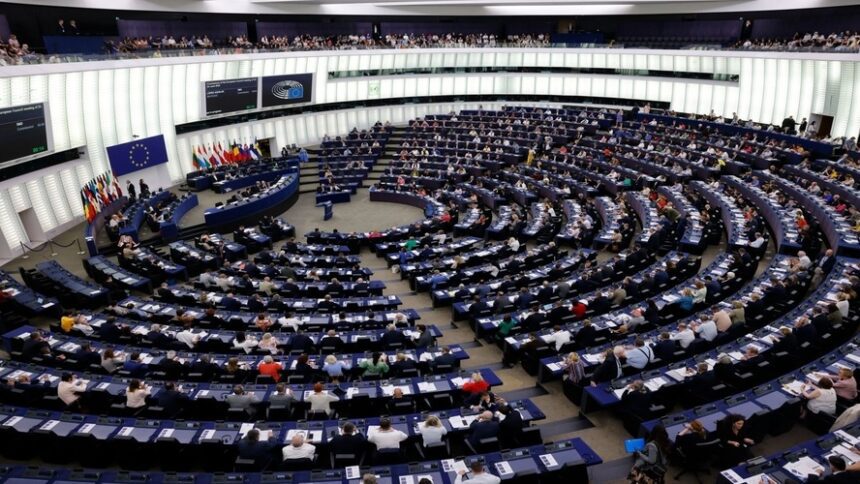
MEPs issued the message in their annual reports on the EU’s common foreign, security and defence policies.
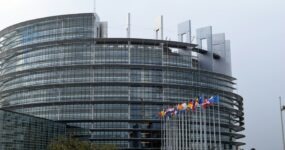
In a resolution adopted in Strasbourg on Wednesday, Parliament denounced the use of unilateral trade threats and “economic intimidation” against Denmark and other EU member states as a form of “coercion.”
Describing these moves as “incompatible with international law and the core principles of cooperation” between NATO allies, MEPs say that Greenland “must not be used as a tool to divide the European Union.”
They call on the EU to respond to the U.S “firmly, collectively and decisively, and to resist any such coercive efforts.”
Parliament, in a statement said it “regrets the US government’s more transactional approach to foreign policy, marked by a reduced commitment to multilateralism and European security.”
The EU has to draw lessons from its vulnerabilities, MEPs say, and avoid being left in a position “vulnerable to coercion in the future.”
Speaking after the vote, Thijs Reuten (S&D, Netherlands) said, “This legislature’s CSDP report underlines that today’s circumstances leave no room for doubt: Europe needs a strong, autonomous and operational defence capacity.
“This means we must rise above short-term national interests, and not only complete a single market for defence, but also give real meaning to the EU’s mutual assistance clause.
“For nearly 20 years, the EU’s Common Security and Defence Policy has largely existed only on paper – it is time to turn it into a reality.
“And today’s reality demands urgency, unity, and the willingness to act. Article 42.7 must become operational, not ceremonial.
“This is not about competing with NATO, but about ensuring that Europe can stand on its own feet and be a credible security actor – for its citizens and its partners alike. Beyond increased spending, strengthening our industrial base must go hand in hand with a renewed security doctrine, confidence, and strategic ambition that match today’s realities.” said the rapporteur.
From Ukraine to the Caucasus, and the Middle East to the Sahel, the Arctic and beyond, “an arc of instability has formed around Europe,” MEPs warn.
“The EU cannot afford to turn inwards and must remain open and engaged, they say, stressing that its global visibility and political influence often fall short of its economic, financial and diplomatic footprint,” said the statement.
While supporting a diplomatic solution to the war in Ukraine, MEPs warn that any settlement imposed by Russia or that “rewards Russian aggression would undermine European security.”
“Russia’s aggression is destabilising the EU’s eastern neighbourhood severely, triggering spillover effects in the Western Balkans that threaten to slow down reforms and fuel anti-European narratives,” say MEPs.
Also commenting, German MEP David McAllilster said: “The EU’s broader strategic task lies in strengthening our global partnerships, enhancing our ability to deter threats, and ensuring that enlargement, neighbourhood policy and cooperation with like-minded democracies serve our long-term security.
“At the same time, the EU must increase its visibility, sharpen its external representation and ensure that its instruments – from sanctions to strategic communication and the Global Gateway – are used effectively and consistently.”
The report was adopted by 392 votes in favour, 179 against and 83 abstentions.

Related Post




Leave a comment