
Clelia Charissis, TV producer and presenter of the bilingual travel documentary series MISSION – APOSTOLI, currently airing for its third consecutive successful season among the Greek Diaspora in the United States (NETV Toronto, BCI Media Group), Australia (NEOS KOSMOS), the United Kingdom (Hellenic TV) and NETV Europe, and soon to be broadcast on TELERAMA Television in Southern Italy (in collaboration with General Director Paolo Parliaro), visited Hydra following the warm welcome of Mayor Georgios Koukoudakis and on the occasion of the international television production The Riders, starring Brad Pitt.
In Hydra, time does not pass — it breathes.
Within its stone mansions, history whispers.
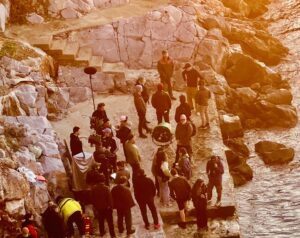
At its harbor, Clean Monday (the Greek celebration of renewal and Lent), is not merely a custom — it is a return to essence.
Kites rise above the masts of history like silent prayers surrendered to the spring sky. At tables beside the sea, lagana bread is broken by hand, seafood carries the scent of salt, and friends share not only food, but something rarer — quality time.
Hydra has the rare ability to transform simplicity into an aesthetic statement.
The absence of excess becomes strength.
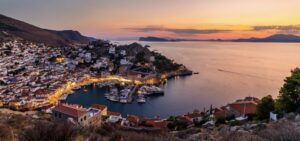
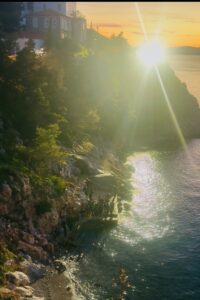
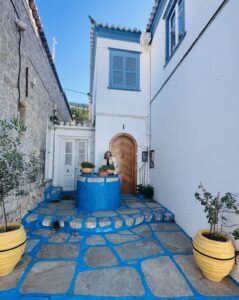
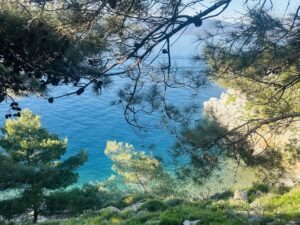
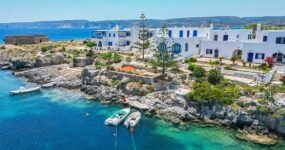
The white of its houses, the grey of its stone, the deep blue of its horizon compose a setting authentic — almost cinematic.
And perhaps that is no coincidence.
The island of light and restraint once again opens its sails to the world of international cinema, through the eternal blue of a sea that never ceases to narrate.
From the kites rising in the Lenten sky to the cameras capturing its timeless light — Hydra proves it can be both tradition and future.
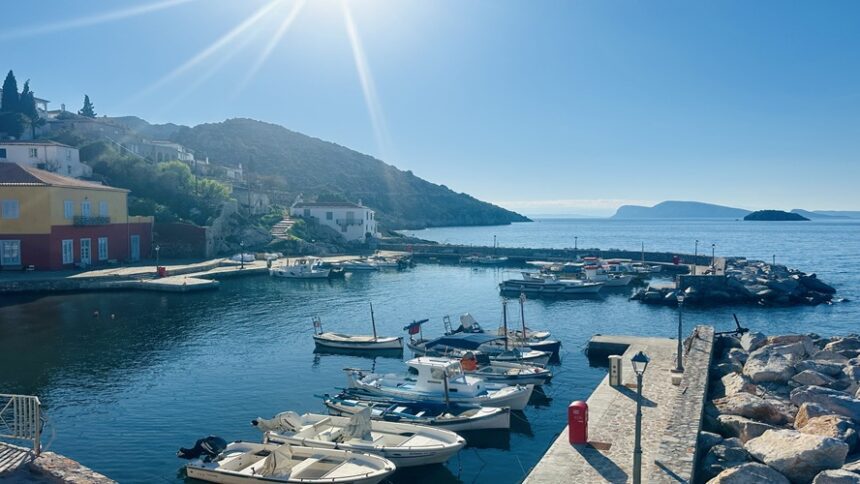
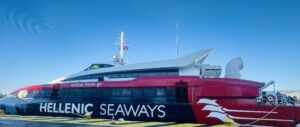
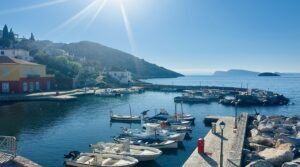
The harbor of Hydra is not simply a point of arrival, with HELLENIC SEAWYAS taking center stage in the “En Plo” scenery of our journey departing from the picturesque port of Piraeus.
It is a stage.
It is memory.
It is promise.
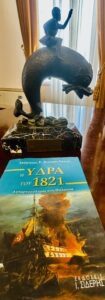
The Mayor of Hydra GEORGE KOUKOUDAKIS, welcomes us, initiating us into the deep knowledge of the island’s history through his book “Hydra of 1821.”
As he notes:
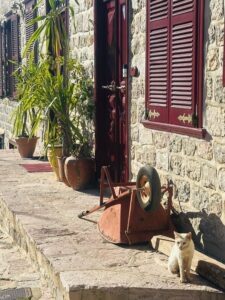
The sculpted mansions — carved from sailors’ sweat and shipowners’ dreams — stand as silent witnesses to an era when Hydra defined its horizon with open sails.
During the Greek War of Independence, the island was not a spectator — it was a protagonist.
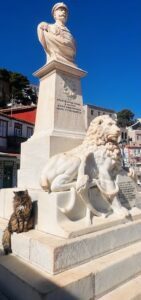
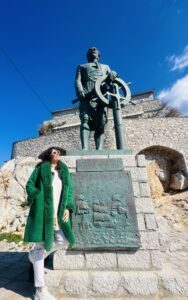
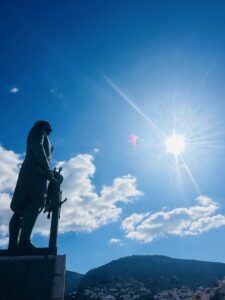
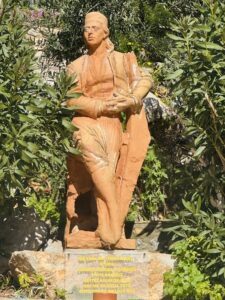
Andreas Miaoulis and Lazaros Koundouriotis, not merely names in books; they are history that pierces through time.
And then came art — that natural continuation of silence…
as if light itself demanded to be captured.
Leonard Cohen, walked these same alleys, listened to this same sea, fell in love beneath this same sky. Painters, poets, creators found here not merely a landscape — but a rhythm. Hydra does not impress. It mesmerizes. It does not impose. It invites.
In recent years, the island has turned its gaze — with strategic maturity — toward international cinema. The Municipality’s initiative to strengthen the presence of foreign productions is not simply a touristic move. It is a cultural statement.
Hydra, with its unique architectural identity and absence of modern interventions, functions as a ready-made natural film set. A stage that requires no scenography — because reality itself is directed by light.
The mayor’s reference to the new international production starring Brad Pitt brings the island’s creative dynamism back into focus. It is not merely the glow of a global name. It is confirmation that Hydra can stand firmly on the international cinematic stage while preserving its identity.
In 1957, the presence of Sophia Loren marked an era.
She was not simply an actress; she was the Mediterranean in human form — light, strength, southern European dignity captured on the international screen.
Today, nearly seven decades later, Greece once again becomes a source of inspiration for contemporary global cinema.
The new production THE RIDERS , starring the Hollywood icon in the cobbled alleys and along the island’s beaches, turns the world’s gaze back here.
The story is based on the novel by Tim Winton.
It follows a man traveling through Europe with his wife and daughter. When his wife mysteriously disappears, he embarks on an existential and emotional search — a journey filled with questions about love, loss, and identity.
Hydra was chosen as a principal filming location, offering:
• Its timeless architecture
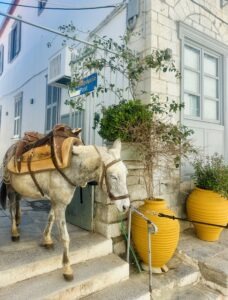
• Its car-free harbor
• Its intense light and sense of isolation
• A poetic, introspective atmosphere perfectly aligned with the existential tone of the story
Hydra does not function merely as a backdrop, but as a character — an island that intensifies the mystery and solitude of the protagonist.
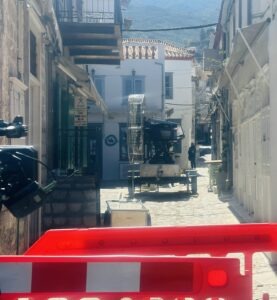
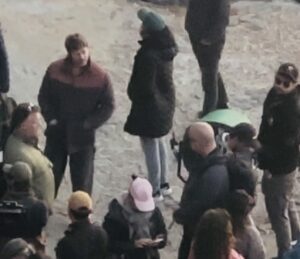
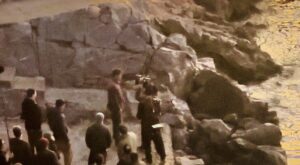
It is worth noting that for every scene featuring the leading star, hours of rehearsals precede the final take, with stand-ins ensuring that every condition is ideal for the anticipated moment.
Ordinary residents of Hydra participate in the film, enriching this major production with shades of blue and white — the colors of Greece.
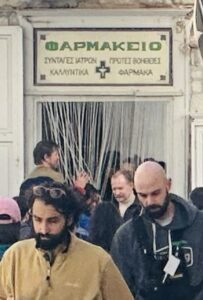
On Clean Monday, we observed the rehearsal shoot: the stand-in running through the rain-drenched set, carrying his injured daughter toward the pharmacy beneath the artificial downpour. Brad Pitt completed the final scene the following morning.
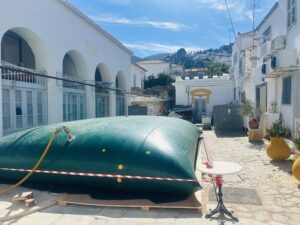
With powerful wind machines and advanced rain systems, the production team recreated the effect of heavy rainfall.
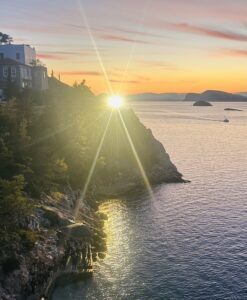
We also watched him at Avlaki in Hydra — beneath the glow of a full artificial moon. The renowned actor portrays a man, alone and desperate, searching for his wife, accompanied only by his daughter and a bottle of alcohol.
In the coming days, filming is expected to capture his arrival at Hydra’s harbor aboard the old yellow “dolphin” hydrofoil, as the story unfolds in 1989.
From the iconic, analog image of 1957
to the multilayered global narrative of 2026.
The bridge of international cinematic presence is not between two faces —
but between two eras.
Greece remains the constant core, as filming will continue in Nea Makri, Attica, from March 11 to 13.
Returning to the heart of the Saronic Gulf…
this place does not function as scenery, but as character.
Thus, classical cinematic heritage meets contemporary creative writing.
The past does not remain behind.
It transforms.
From the kites of Lent to the cameras capturing its eternal light, Hydra — more relevant than ever — proves it can be both future and tradition. It honors custom without fearing evolution. It remains authentic while opening itself to the world of tourism.
In an era when most places accelerate, Hydra chooses to breathe.
And within that breath, there is room for the tradition of Clean Monday and the outward gaze of modern cinema. There is space for the silence of stone and the lens of the camera. For simplicity and global projection.
An island…
with inexhaustible movement of nobility and soul.
And perhaps, ultimately, this is its power:
each time the camera rolls,
Hydra does not play a role —
it simply becomes itself.

Screenshot
Screenshot
Screenshot
Screenshot
Screenshot







Leave a comment