
By Dr. Panagiotis Sfaelos
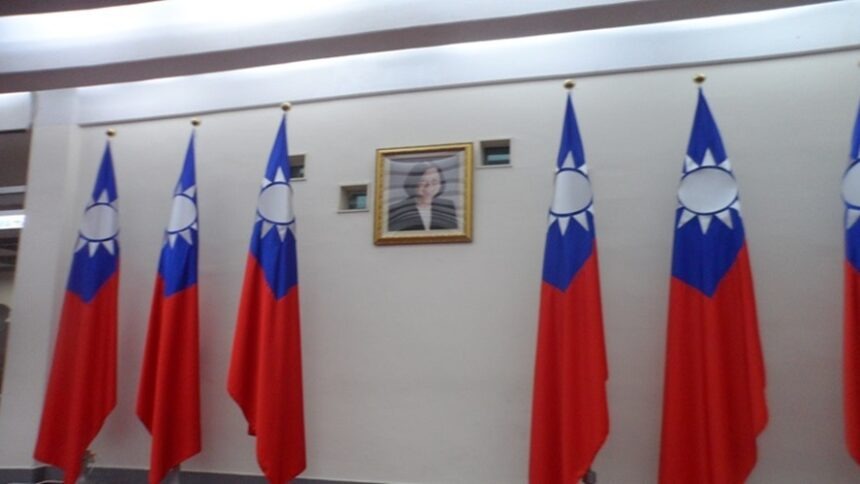
When you arrive in Taiwan (Republic of China) – a green island in the Pacific Ocean which Portuguese navigators had named Formosa (meaning beautiful island) – you realize the technological progress, the prosperity, the pro-Western democratic culture that prevails but also the strong tradition. The people are kind and welcoming and make you feel at home. In the journalistic mission I participated in, I got to know Taiwan and its people. Despite the problems it has with the People’s Republic of China, Taiwan has managed to stand worthy on the world stage even without the full recognition of the international community.
Technology and development
Taiwan is a country with a rapidly developing economy and technological innovation. Taiwan produces the majority of microchips in all modern technology products. We got a first-hand look at Taiwan’s technological research and technological innovations as we visited the Taiwan Industrial Technology Research Institute which promotes research in new technology and innovation, particularly in the fields of artificial intelligence, smart devices, health and the environment. The institution in question has been awarded with 100 distinctions since 2008 until today.
According to the National Development Council of Taiwan, which we visited, the country has six strategic goals from 2020 onwards: 1) technology research and development for the information and digital technology industries, 2) research and technology development in the cyber security industry, 3) building a platform for the health industry, which will integrate materials from Taiwan Biobank and the National Health Insurance Research Database, 4) promoting national defense and strategic industries, domestic naval and aircraft industries, 5) promoting green industry and renewable energy sources, 6) stabilization of main supply chains, including energy, food, daily needs, medical supplies, disaster relief, etc.

Climate Change
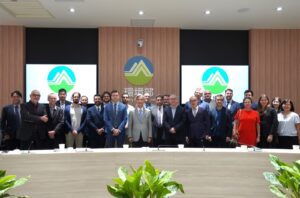
The Ministry of Environment informed us that by 2050, Taiwan wants to achieve zero carbon emissions. This objective is divided into 12 strategic areas: 1) wind; 2) hydrogen, 3) innovative technology, 4) energy storage, 5) energy conservation, 6) carbon capture and storage, 7) electric mobility, 8) recycling 9) carbon sinks, 10) green living, 11) green economy, 12) fair transition.
Foreign Policy and Defense
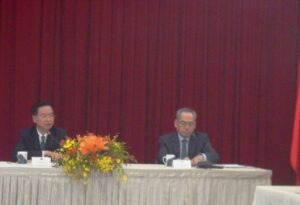
Taiwan’s main national security threat comes from the People’s Republic of China (PRC) which considers Taiwan as part of its territory (One China Principle). Taiwan has assessed the risk and established the Council of Mainland Affairs, which is independent from the Ministry of Foreign Affairs and deals exclusively with the Chinese mainland. In fact, Deputy Minister of the Mainland Affairs Council Jan Jyh-Horng explained at the press conference, that «if we were to treat Taiwan-China relations as part of internal affairs, we would not be able to properly separate Taiwan from mainland China. If we considered our relations with China as “foreign affairs”, China would not dare to interact with us – because Beijing insists that Taiwan is part of China. Even if we call them, they won’t pick up the phone! If we send them a fax message, they don’t answer. Even if we want to invite some of their people to Taiwan or we want to send some officials to mainland China for some exchanges, everyone says no».
Taiwan therefore faces the indifference of the People’s Republic of China while being threatened in the Taiwan Strait. Taiwan’s Foreign Minister Josef Wu told us that Beijing is working “very hard” to isolate Taiwan in a number of ways, including preventing it from gaining observer status at the UN and the World Health Organization. China threatens Taiwan every day. As the Foreign Minister characteristically emphasizes: «Everything we do, everything we say, is provocative for China… The fact that Taiwan is a democracy is a provocation for China.»
When we asked the National Institute for Defense and Security Research about the war in Ukraine, they replied that they have studied the case of Ukraine and they know how dangerous international isolation is and how important international support is for Taiwan. They also stressed that they are concerned about the possibility of Russia helping China in the event of an invasion of Taiwan by the latter. Taiwan is arming itself militarily as well as at the level of disinformation and hybrid warfare.
Taiwan’s geopolitical position is important as it is located in the South China Sea while the Taiwan Strait is a point of conflict with the People’s Republic of China. The security of the Taiwan Strait is very important to international shipping and global trade.
Internal security
Criminal Investigations Bureau (CIB) Commissioner Yew-Woei Chou briefed us on the agency’s strategies for international crime, organized crime, financial crime, drug trafficking and cybercrime. As he emphasizes, it is important for Taiwan to join Interpol in order to better deal with cross-border crime. Already, CIB is co-operating with other countries. But by joining Interpol, Taiwan could share important information that would help tackle international crime. There is also a section of the CIB that deals with security and crime issues in the Taiwan Strait (Cross Strait Affairs Division). In terms of public order, the Commissioner assured us that there is security on the streets of Taipei with the use of cameras and strict policing. The biggest problem is cybercrime according to the Commissioner.

Human Rights
Human rights are protected in Taiwan, there is a free press, pluralism and free democratic elections. In 2020, Freedom House ranked Taiwan as the second freest country in Asia after Japan.
The 1996 election marked a historical milestone for Taiwan as it was the country’s first direct presidential election.
It is also important to emphasize that the State honors the history of the 22,000 dissidents persecuted by the regime in the period 1949-1992 in a special Human Rights Museum which we were guided to.
Culture and tradition
During our visit, we tasted the excellent local cuisine with its distinct flavors but also we experienced the lifestyle of Taipei, with its overnight markets and the vibrancy of the people. We got to know the local culture and atmosphere. Tradition is very strong in Taiwan. We visited the National Museum where the national treasures saved from China in 1949 are kept. We were impressed by the majestic Chiang Kai-shek monument but also by the Presidential Palace and the Guest House, built during the Japanese occupation of Taiwan.
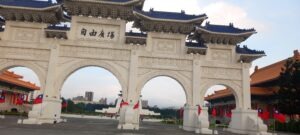
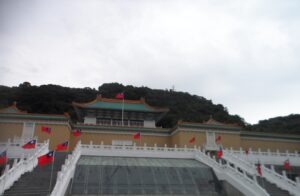
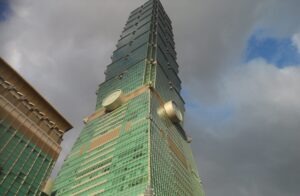
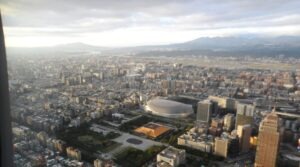
The architecture of Taipei is amazing with impressive buildings and Tower 101 from where we enjoyed the wonderful view of the city. There is reconstruction in the city of Taipei, while the very good infrastructure is impressive.
Overall, Taiwan has made huge economic and political progress, despite its isolation from international organizations, due to the dispute with the People’s Republic of China. It is not recognized by all countries while its diplomatic relations with countries where there is a strong Chinese presence are at a very low level. However, Taiwan has cultivated strong ties with the US and the West in general, something that will come in handy in a potential conflict with the People’s Republic of China. It has strong defensive armor while excelling in new technologies that are useful in a possible war with China. Taiwan is open to international cooperation and wants to join international organizations.
The article is based on a journalistic mission in Taiwan







Leave a comment