
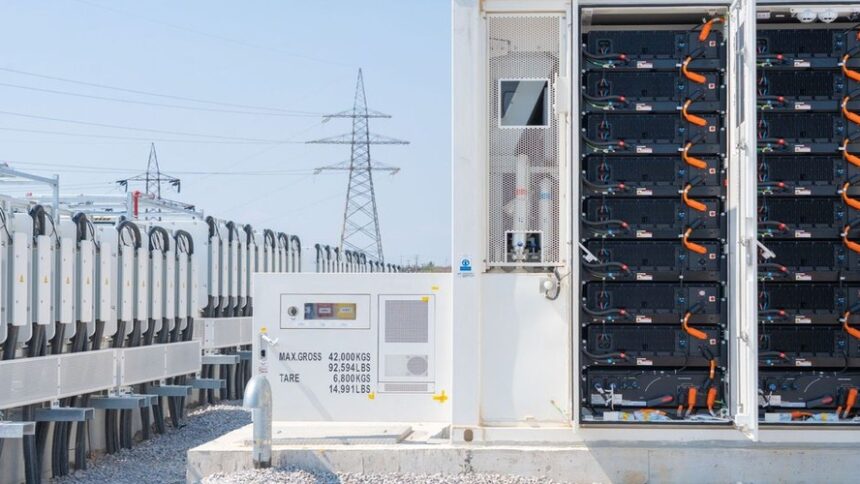

Two different eras of energy meet at Helleniq Energy’s industrial facilities in Thessaloniki. At the spot where refining has been present for more than six decades, Helleniq Energy is now installing infrastructure that meets the needs of a different energy system. Tanks and oil processing units coexist with battery arrays, reflecting the gradual transition from a group focused on petroleum products to a broader energy group.
Helleniq Energy inaugurated on Thursday in Thessaloniki its first large storage facility, with a total capacity of 100 megawatts and a storage capacity of 200 megawatt-hours.
This is an investment of approximately €50 million, which is part of Helleniq Renewables’ broader plan to develop a diversified portfolio of Renewable Energy Sources and storage in Greece and Southeastern Europe.
“Today’s milestone of the operation of our first batteries is particularly important for the implementation of our strategy to create a strong pillar in electricity and RES, as a vertically integrated group with a strong presence across the spectrum of energy activities,” emphasized the company’s deputy CEO, Giorgos Alexopoulos, during the presentation of the unit. He linked the need for faster battery development to the market’s ability to capitalize on the penetration of renewable sources. He noted the delays that Greece is experiencing in storage in contrast to Bulgaria, which, as he said, “currently has the largest installed capacity in relation to its size in Europe and at noon when prices are low, it imports energy from Greece, charges its batteries and often returns it to us at night at a high price.”
Without any batteries to store energy during peak hours and release it to the system during times of shortage, renewables could turn from an opportunity into a problem, said Alexopoulos, explaining the group’s priority at this stage for storage.
For Greece to achieve its national targets by 2030, he said, it must speed up the issuance of connection and licensing conditions. He estimated that with the current timetable, the first batteries from the Environment and Energy Ministry’s process for storage projects without subsidy are expected to be operational in 2028.
Source: Ekathimerini.com












Leave a comment