
By Martin Banks
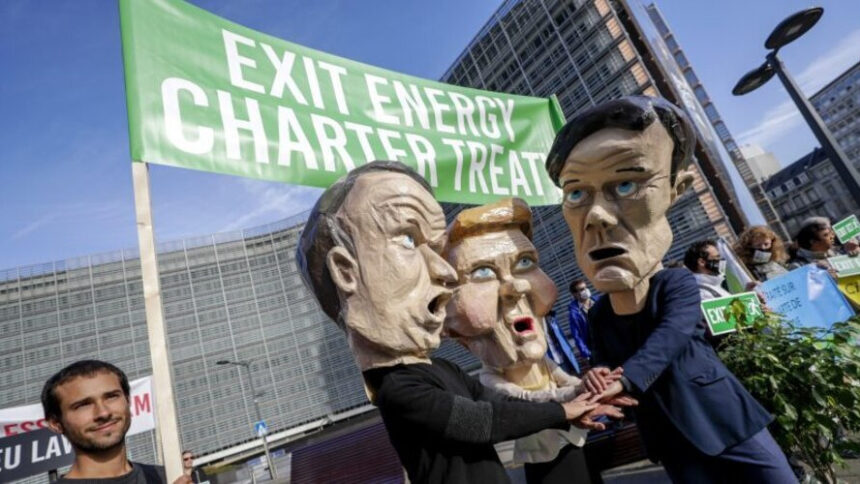
Euro MPs are this week being asked to approve the EU’s withdrawal from the Energy Charter Treaty (ECT).
It has been claimed by some members that the EU should not participate in a treaty “that falls short of our climate targets and investment rules.”
They include the S&D group that says that “even the recently modernised ECT falls short” of the EU Green deal and international climate goals, including the Paris Agreement.
“It leaves fossil fuel investments protected. Under the Energy Charter rules, still in force, energy companies can sue governments, for example in the event of government decisions that restrict the use of fossil fuels,” claims the Group.
One of its MEPs, Inmaculada Rodríguez-Piñero, its spokesperson on international trade, declared on Wednesday: “Better late than never!”
The MEP added, “The EU will finally exit from an outdated Energy Charter Treaty. We have led the efforts for this to happen, because we believe that despite the reform, the ECT continues to jeopardise the fight against climate change and the green transition.
“In particular, it is a barrier for efforts to get rid of fossil fuels, leaving the door open to unnecessary and costly private arbitration cases.
“We regret that the co-ordinated withdrawal of all EU member states from the Energy Charter Treaty – an option we have been demanding – is not possible, as some member states wish to remain party to the treaty. As Socialists and Democrats, we will continue to work to adapt our agreements to the fight against climate change, and to develop modern, transparent rules for settling disputes.”
Further comment comes from another MEP Jens Geier,his group’s negotiator on the committee on industry, research and energy.
The member added:“It was high time for the EU to withdraw from the Energy Charter Treaty. Our Union committed to the deployment of renewable energy sources and this Treaty was an obstacle to achieve this goal. This goes against the strategic interests of our industry and our citizens to considerably decrease our dependence on the import of fossil fuels from third countries. In a turbulent world where the EU wants to increase its autonomy, it was no more in our interests to remain a signatory of this outdated piece of international legislation.”
The international agreement, which came into force in 1998, was originally intended to protect investments in the energy sector. Among other things, it contains provisions on investment protection and the settlement of investment disputes.
Under the ECT, companies can reportedly attempt to claim compensation from governments who thwart their investments. They do this through the so-called investor-state dispute settlement (ISDS), a private arbitration mechanism. This,it is alleged by some MEPs, has “allowed polluting companies to challenge climate action in secretive tribunals, creating a dangerous chilling effect on climate policies.”








Leave a comment